
Words and Photos by Henrylito D. Tacio
In the Philippine countryside, where the nation’s food is grown and harvested, a quiet crisis persists—one that rarely makes headlines but profoundly shapes agricultural output. It is not drought, nor pests, nor the rising cost of farm inputs. It is malnutrition.
Across upland barangays and rural communities, the very people responsible for producing food often lack access to nutritious meals themselves. Their bodies work long hours under the sun, but without proper nourishment, their strength, stamina, and productivity are compromised. It is a paradox that continues to haunt the country’s agricultural sector: farmers who feed the nation cannot adequately feed their own families.
For Jethro P. Adang, director of the Mindanao Baptist Rural Life Center (MBRLC) in Bansalan, Davao del Sur, this nutritional gap is not merely a health issue—it is an agricultural one. And he believes one of the simplest, most accessible solutions is also one of the oldest: milk.
Milk and the Malnutrition Problem
“One major reason why agriculture in the Philippines lags is because of malnutrition,” Adang stresses. “The members of most farm families in the country are either malnourished or undernourished and this is significantly reducing their productivity.”
Milk, he argues, is a powerful corrective. “Milk is our most ideal food, meeting our nutritional needs better than any other single food item,” explains Adang. “It is rich in most of the nutrients needed by the human body. That is why newly-born babies can subsist solely on milk in the first few months of their lives.”
Nutritionists agree. Milk is an excellent source of protein, calcium, and vitamins A and B complex—nutrients essential for building bones, muscles, teeth, and brain tissues. For growing children, hardworking farmers, and elderly individuals alike, milk is one of the most complete foods available.
Yet despite its importance, milk remains scarce and expensive in the Philippines.
A Dairy Industry That Never Took Off
The Philippine dairy industry has long been described as “underdeveloped,” but the term barely captures the scale of the problem. The country produces only 1% to 2% of its domestic dairy requirement, according to the Department of Agriculture. This means that nearly all milk consumed in the Philippines is imported.
The National Dairy Authority (NDA) reports that inbound milk shipments have reached record highs: 3.5 billion liters, valued at ₱80.1 billion. Most of these imports come from New Zealand, the United States, Australia, Poland, and Denmark.
For many Filipinos, this dependence is felt in every sip. “Every time I drink a glass of milk in a restaurant, I taste the stale, unpleasant flavor of powdered milk,” complains one housewife. “I wonder what has happened to fresh milk in this grass-producing country. Why can’t we have a viable dairy industry and stop paying exorbitant prices for second-rate, tasteless imports?”
Her frustration echoes a national sentiment: Why does a country with vast agricultural land and millions of livestock still rely almost entirely on foreign milk?
The Case for Goats
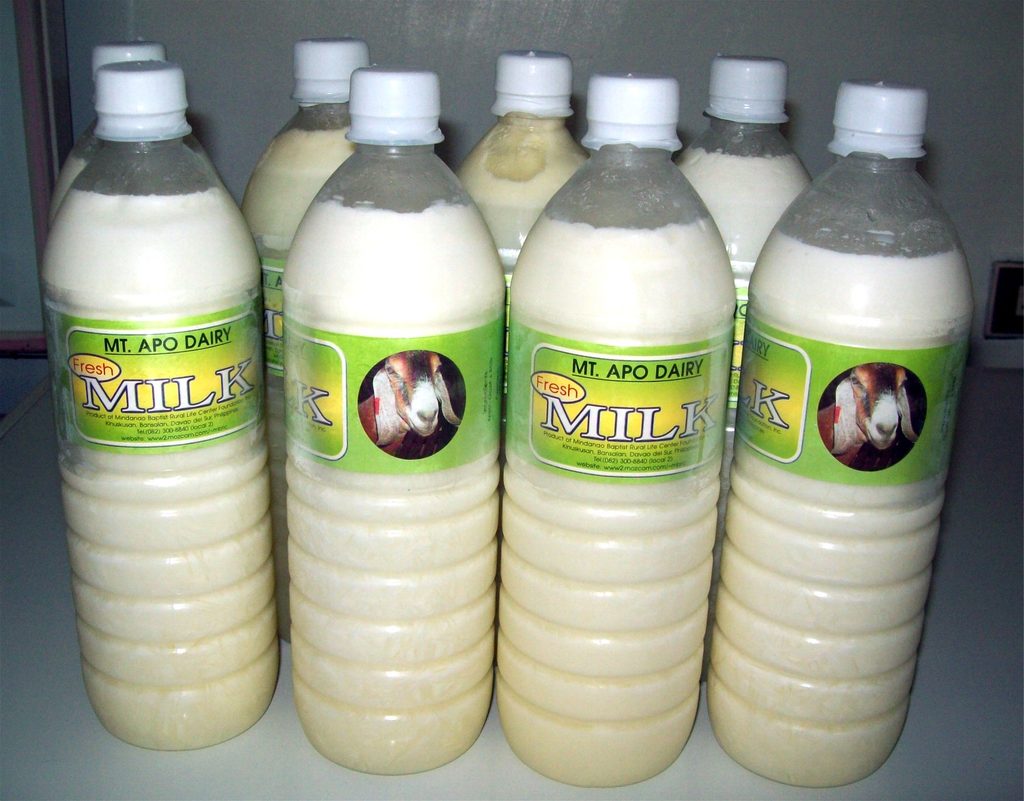
In the Philippines, milk can come from cows, carabaos, and goats. Of the three, goats are the most economical to raise. They require less land, less feed, and less capital. They reproduce quickly and thrive even in marginal upland areas. For this reason, goats have earned the nickname “poor man’s cow.”
Goat milk also has unique advantages. It is less likely to cause allergies, especially among infants, and is easier to digest than cow or carabao milk. Goat milk can be digested in 20 minutes, compared to cow’s milk which takes two to three hours.
This is why MBRLC has been actively promoting goat raising for decades. “Goat raising is one of the most simple, low-cost food production projects that a Filipino can get involved in,” Adang explains. “Because of the rising cost of commercial feeds these days, goats have become one of the most economical alternatives for meeting the protein needs of Filipino families.”
Goats thrive on grasses and field greens, require minimal supervision, and can be raised by anyone—from backyard farmers to upland communities with limited resources.
Goats in the Philippines: A Growing Population
Recent data from the Philippine Statistics Authority places the national goat population at 3.64 million to 3.88 million heads. Remarkably, 99% of these goats are raised by smallholder or backyard farmers rather than commercial operations.
Regions with the highest goat inventories include Central Visayas, Central Luzon, and Western Visayas. This distribution shows that goat raising is already embedded in rural life—what’s missing is the push toward dairy production.
MBRLC’s Research and the Promise of Goat Milk
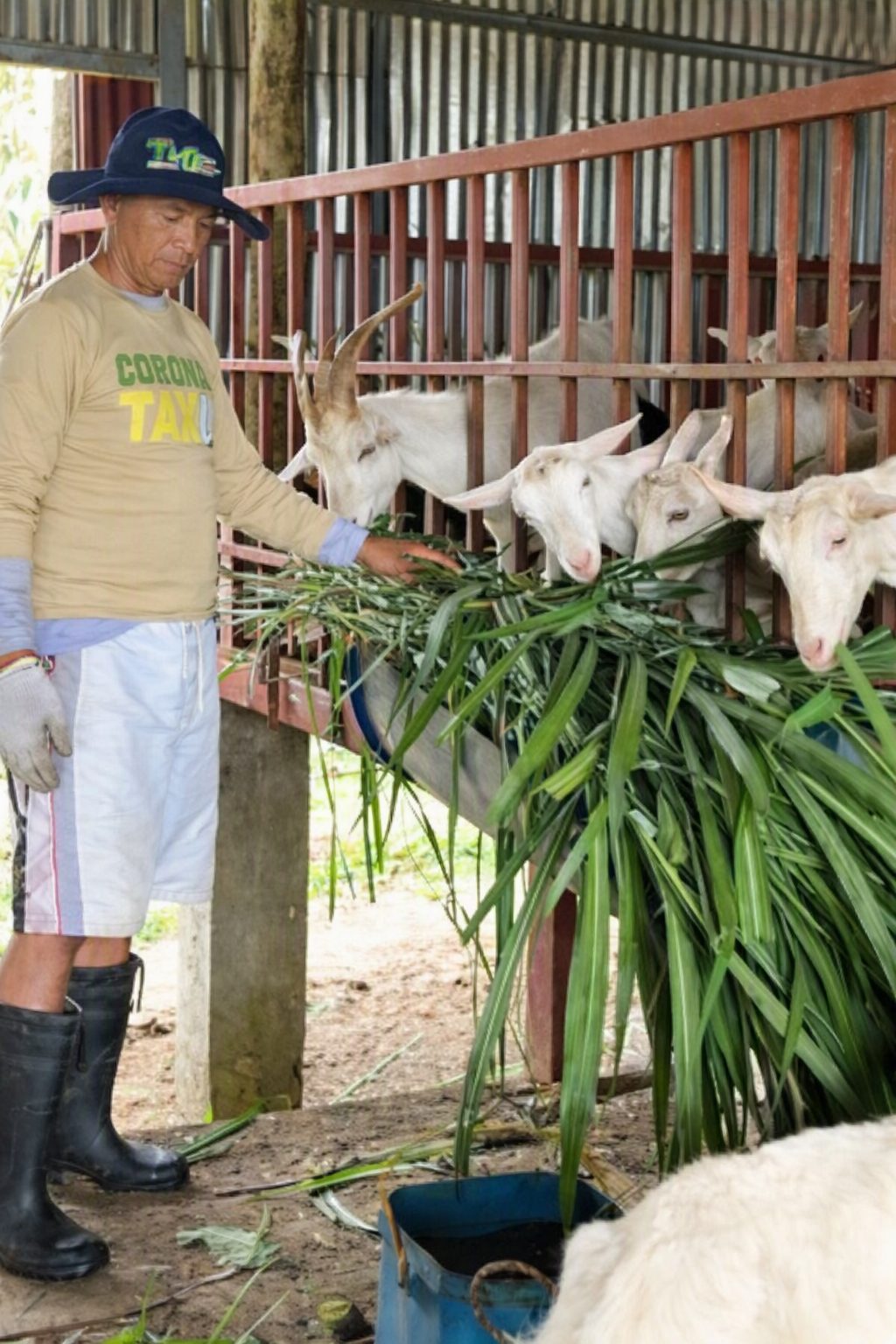
Research conducted at MBRLC shows that a purebred milking doe can produce 3 to 4 liters of milk per day, including the milk fed to kids. This is significantly higher than the national average of 2 liters.
If more farmers adopt dairy goat production, Adang believes the Philippines can gradually build a local dairy industry. “Popularizing goat milk consumption nationally would drastically cut the huge amount of foreign exchange being spent annually to fill domestic demand for milk and its by-products,” he says.
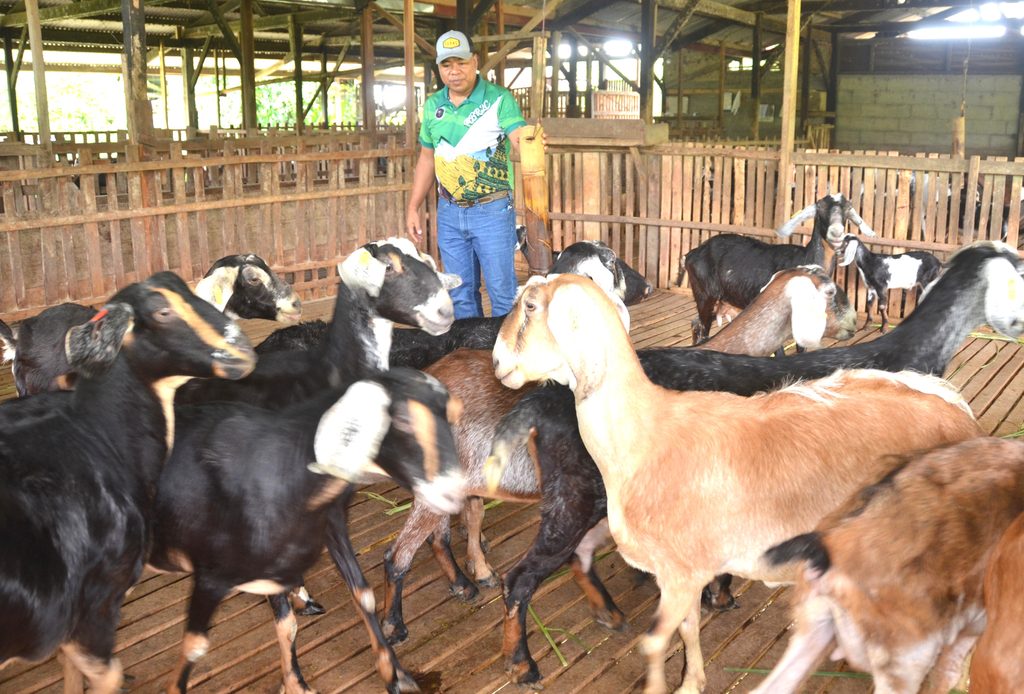
MBRLC primarily raises Anglo-Nubians, known for their adaptability and high butterfat content. Recently, the center added Saanen goats, which can produce 1 gallon (3 to 4 liters) or more of milk per day.
SALT 2: A Sustainable Goat-Based Farming System
MBRLC has been raising goats since the early 1970s and has developed a sustainable method called Simple Agro-Livestock Technology (SALT 2), a modification of its internationally recognized Sloping Agricultural Land Technology.
“SALT 2 is a half-hectare model of goat-based agroforestry with a land use of 40 percent for agriculture, 40 percent for livestock, and 20 percent for forestry,” Adang explains.
This integrated system prevents soil erosion, improves soil fertility, provides feed for goats, ensures diversified farm income, and supports long-term sustainability.
MBRLC offers a training course on goat raising at its center in Kinuskusan, Bansalan, Davao del Sur, equipping farmers with practical skills to start their own projects.
Beyond Milk: The Cultural Value of Chevon
Goats also provide meat known as chevon, which is culturally significant in many regions. It is commonly served during fiestas and special occasions, prepared as kalderetang kambing, papaitan, and kilawin.
Chevon is especially popular in Northern Luzon and Muslim-majority areas where halal meat is preferred. It is typically priced higher than pork or chicken, making it a special-treat item rather than an everyday staple.
Goat meat is sold either dressed (with skin) or skinned, with edible entrails available at lower prices.
A Path Forward
The Philippines stands at a crossroads. It can continue importing billions of pesos worth of milk every year, or it can empower its farmers to produce nutritious, locally sourced dairy through sustainable goat raising.
The solution is not complicated. It does not require massive infrastructure or high-tech equipment. It requires awareness, training, and a shift in mindset—recognizing that goats, long considered the “poor man’s cow,” may actually be the key to improving nutrition, strengthening rural livelihoods, and reducing dependence on foreign dairy.
In the end, the future of Philippine agriculture may depend not on grand policies or expensive technologies, but on something as humble as a goat. In every liter of fresh goat milk is the possibility of a stronger farmer, a healthier child, and a more resilient nation. If the Philippines chooses to invest in this small but mighty animal, it may finally break free from its dairy dependence—and nourish the very people who nourish the country.

 Facebook
 Twitter