
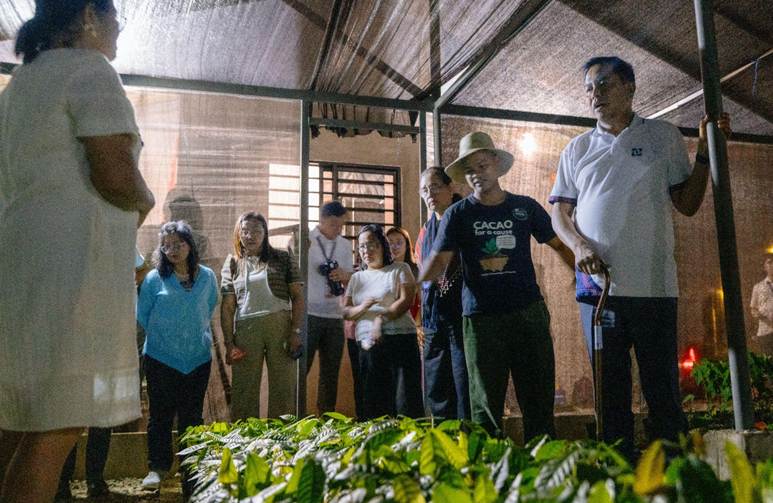
The Smart Cacao Management System developed in Apayao aims to modernize local cacao farming by introducing automation, digital monitoring and data analytics into agricultural operations. The initiative seeks to address common production challenges, including high seedling mortality, inconsistent irrigation, labor-intensive farm activities and limited field monitoring, while helping growers make better-informed farming decisions.
A local farm enterprise in Apayao has developed a digital initiative to modernize cacao production, from seedling propagation to field management and market access, through automation and data analytics.
Farm North Agriventures Inc., with the support of the Department of Science and Technology – Cordillera Administrative Region (DOST-CAR), created the Smart Cacao Management System (SCMS) designed to address the bottlenecks in local cacao farming.
“The project aims to address high seedling mortality, inconsistent irrigation, labor-intensive operations, and limited farm monitoring,” Engr. Mark Jan R. Galleon, the enterprise’s president and a former overseas worker in Bahrain, said.
Drawing from his background in industrial process control, Galleon explored how utilizing science and technology can improve farming practices, hence applying automation, instrumentation, monitoring, and process optimization to agriculture.
“This inspired our vision of developing an integrated Smart Cacao Management System that combines practical agricultural knowledge with modern technology to improve productivity and support data-driven decision-making,” he said.
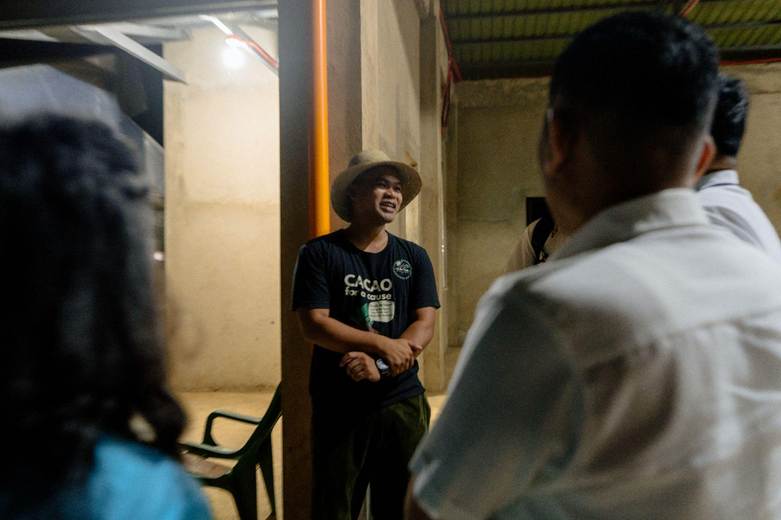
Engr. Mark Jan R. Galleon, lead of the Smart Cacao Management System, explains how the technology helps improve cacao production. (Photos by Xyrus Ivan B. de Gracia)
Components of the system include solar-powered automated irrigation and environmental sensors to optimize water and energy use and ease manual farming labor.
Through geographic information system (GIS) mapping of cacao trees, the SCMS will help manage the farm operation, track seedling growth, and support plantation services.
Moreover, it features real-time monitoring of production performance, data analytics and forecasting, and marketing tools integrated into a mobile and web-based platform.
“This will reduce cacao seedling mortality from 40% to 10% or lower, and increase gross sales by approximately 200% through expanded seedling production and pilot contract growing activities,” the engineer shared.
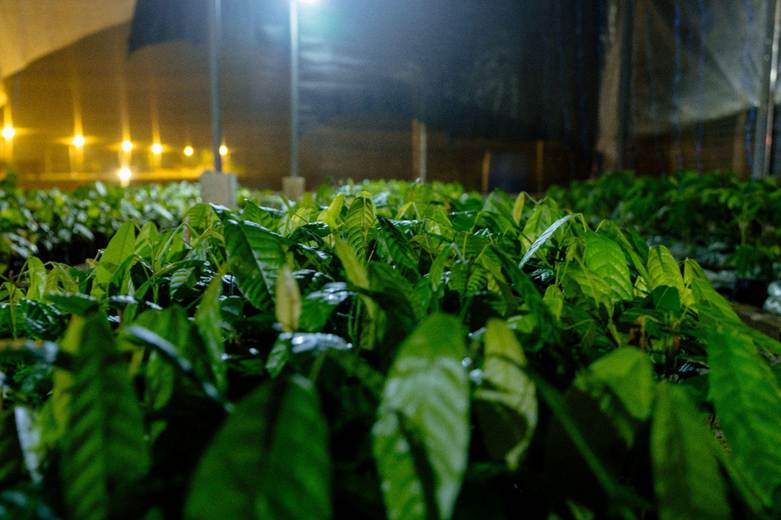
Cacao seedlings nesting at the greenhouse of Farm North Agriventures Inc., a beneficiary of the iFWD Program of the DOST. (Photos by Xyrus Ivan B. de Gracia)
Beyond the perimeters of its farm, the SCMS also aims to strengthen market linkages by connecting cacao farmers and producers with institutional buyers, which shall establish better market access and a more organized and reliable cacao supply chain.
“Through this initiative, we hope to share technologies and experiences with local farmers and agricultural organizations, contributing to a more productive, competitive, and sustainable cacao industry in Apayao,” he emphasized.
With Galleon’s previous overseas engagement, the SCMS qualified to be rolled out through the Innovations for Filipinos Working Distantly from the Philippines program of the DOST, receiving Php 500,000 in funding support.
The SCMS is one of the projects visited by the department on November 5, 2026, during the celebration of the DOST-CAR’s Regional Science, Technology, and Innovation Week in Luna, Apayao. (PR)

 Facebook
 Twitter