
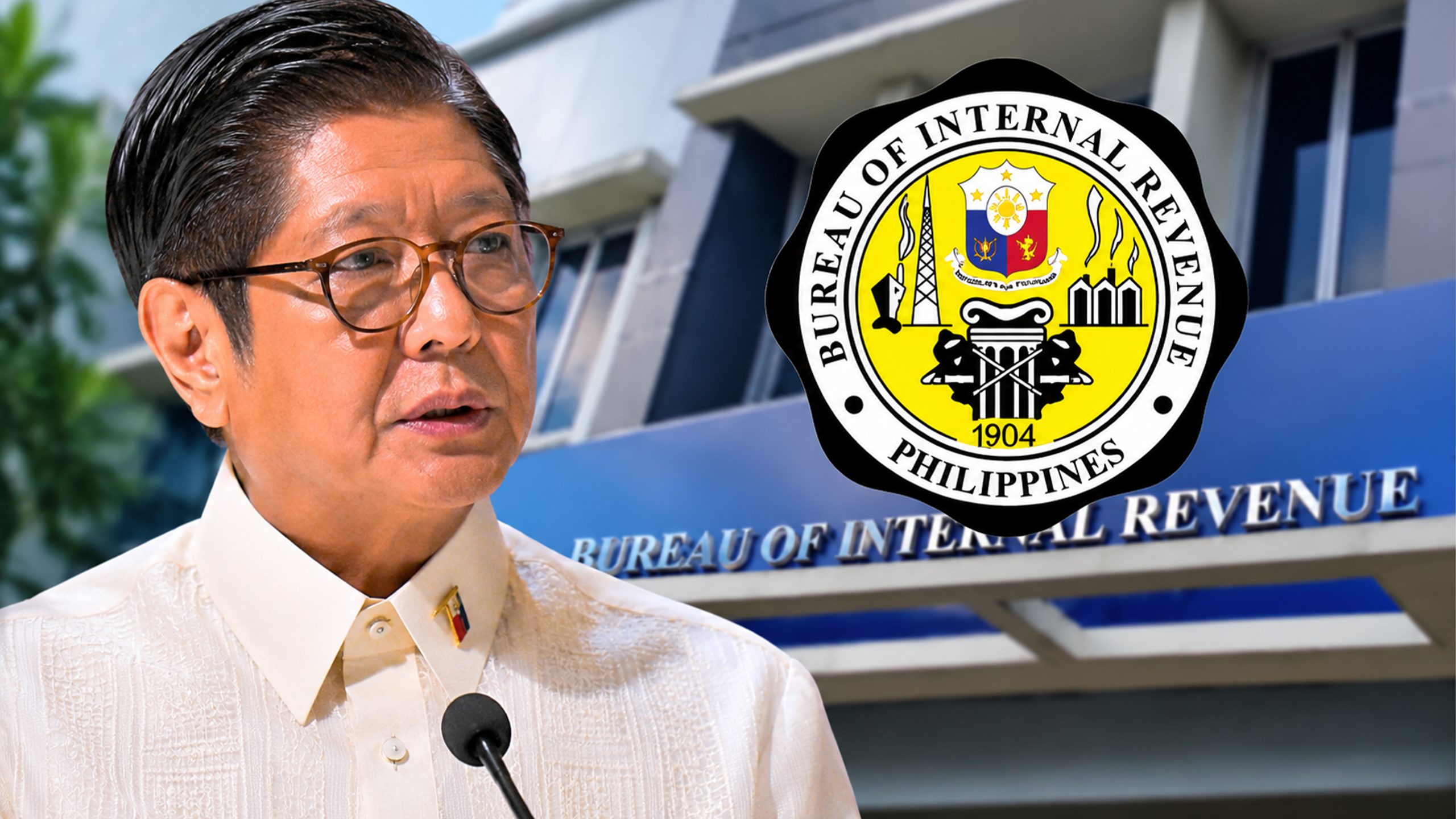
The Marcos estate tax controversy has returned to the spotlight after political coalition 1Sambayan urged newly appointed Bureau of Internal Revenue (BIR) Commissioner Rolando Ligon Jr. to take action on the family’s reported ₱203-billion tax liability before December 2, 2026. The group warned that the government must protect its legal ability to collect the outstanding taxes as questions emerge over the applicable deadline for pursuing the decades-old assessment.
In a statement reported on November 16, the group called on Ligon to protect the government’s ability to collect the approximately ₱203 billion liability, which has remained a longstanding issue across several administrations.
The coalition said the December 2 date marks five years since the BIR issued a written demand to the Marcos heirs in 2021. It warned that the expiration of the applicable prescription period could affect the government’s ability to pursue collection if the necessary legal steps are not taken.
1Sambayan urged the new BIR chief to issue and properly serve another written demand on the heirs, if legally required, before the applicable period expires.
Marcos Estate Tax Originally Assessed at ₱23.29 Billion
The estate tax controversy dates back to the estate of former President Ferdinand Marcos Sr., who died in September 1989.
Following an investigation into the family’s tax liabilities, the BIR issued a deficiency estate tax assessment of approximately ₱23.29 billion on July 26, 1991.
The assessment followed findings that the late president’s estate had failed to file the required estate tax return and that several income tax returns covering 1982 to 1986 had not been filed.
The Marcos family challenged the government’s collection efforts. However, the Court of Appeals dismissed the petition in 1994, ruling that the tax assessments had already become final and unappealable.
In June 1997, the Supreme Court upheld the appellate court’s ruling in Ferdinand R. Marcos II v. Court of Appeals, G.R. No. 120880.
The high court recognized the BIR’s authority to pursue collection through the applicable summary remedies, including the levy of properties, without first obtaining approval from the probate court.
The ruling became final and executory in 1999.
How the Liability Reached Approximately ₱203 Billion
The original ₱23.29 billion assessment eventually increased because of accumulated interest, surcharges, and penalties.
By December 2021, the outstanding liability had reportedly reached approximately ₱203 billion.
The figure was previously acknowledged in connection with a written demand sent by the BIR to the Marcos heirs on December 2, 2021.
Then-BIR Commissioner Caesar Dulay confirmed the demand in a letter dated March 14, 2022, responding to an inquiry from Aksyon Demokratiko chairman Ernest Ramel.
The confirmation was subsequently reported by the Philippine Daily Inquirer.
The approximately ₱203 billion figure represents the reported accumulated liability as of December 2021, rather than a newly issued assessment in 2026.
Why December 2, 2026 Matters
According to 1Sambayan, the five-year anniversary of the BIR’s December 2, 2021 written demand raises concerns about the applicable legal prescription period for collecting the outstanding taxes.
Under the National Internal Revenue Code, the government is generally subject to statutory periods for enforcing tax assessments and collecting unpaid taxes, although certain circumstances and legal actions can interrupt or suspend those periods.
The coalition argues that the BIR should not allow procedural deadlines to compromise the government’s ability to collect the outstanding liability.
However, whether December 2, 2026 is the final applicable deadline depends on the legal circumstances surrounding the assessment and subsequent collection proceedings.
The BIR has yet to publicly clarify, in the reports available, whether additional collection actions have been undertaken or whether the applicable prescription period has been interrupted or suspended.
New BIR Commissioner Faces Public Accountability Questions
Ligon’s appointment places the issue before a new BIR leadership.
He was sworn in as commissioner on November 13, 2026, by President Ferdinand Marcos Jr. Before his appointment, he served as an undersecretary at the Department of Finance.
1Sambayan also highlighted the political sensitivity of the case, noting that President Ferdinand Marcos Jr. is an heir and co-administrator of his father’s estate.
The group stressed that the circumstances make transparency and impartial enforcement particularly important.
It said the BIR must demonstrate that tax laws apply equally, regardless of the identity or political influence of the taxpayer.
The coalition emphasized that its appeal is not simply a matter of political preference but concerns the enforcement of a final and executory judicial ruling and the protection of government revenue.
Billions in Public Revenue at Stake
The Marcos estate tax controversy remains one of the country’s most significant and longstanding tax collection issues.
The original assessment was upheld through the judicial process, but the reported accumulated liability has continued to draw public attention because of the amount involved and the questions surrounding its collection.
For 1Sambayan, the immediate concern is whether the government will take the necessary legal steps to protect its collection rights before the period it has identified expires.
The BIR’s next actions could determine whether the government can continue pursuing the substantial tax liability and demonstrate its commitment to enforcing tax obligations consistently.
As December 2 approaches, attention is turning to Commissioner Ligon and whether the agency will clarify the legal status of the outstanding assessment and the steps being taken to collect it.
Sources: The Philippine Star, Daily Tribune, Philippine Daily Inquirer, Supreme Court of the Philippines and Presidential Communications Office.

 Facebook
 Twitter