
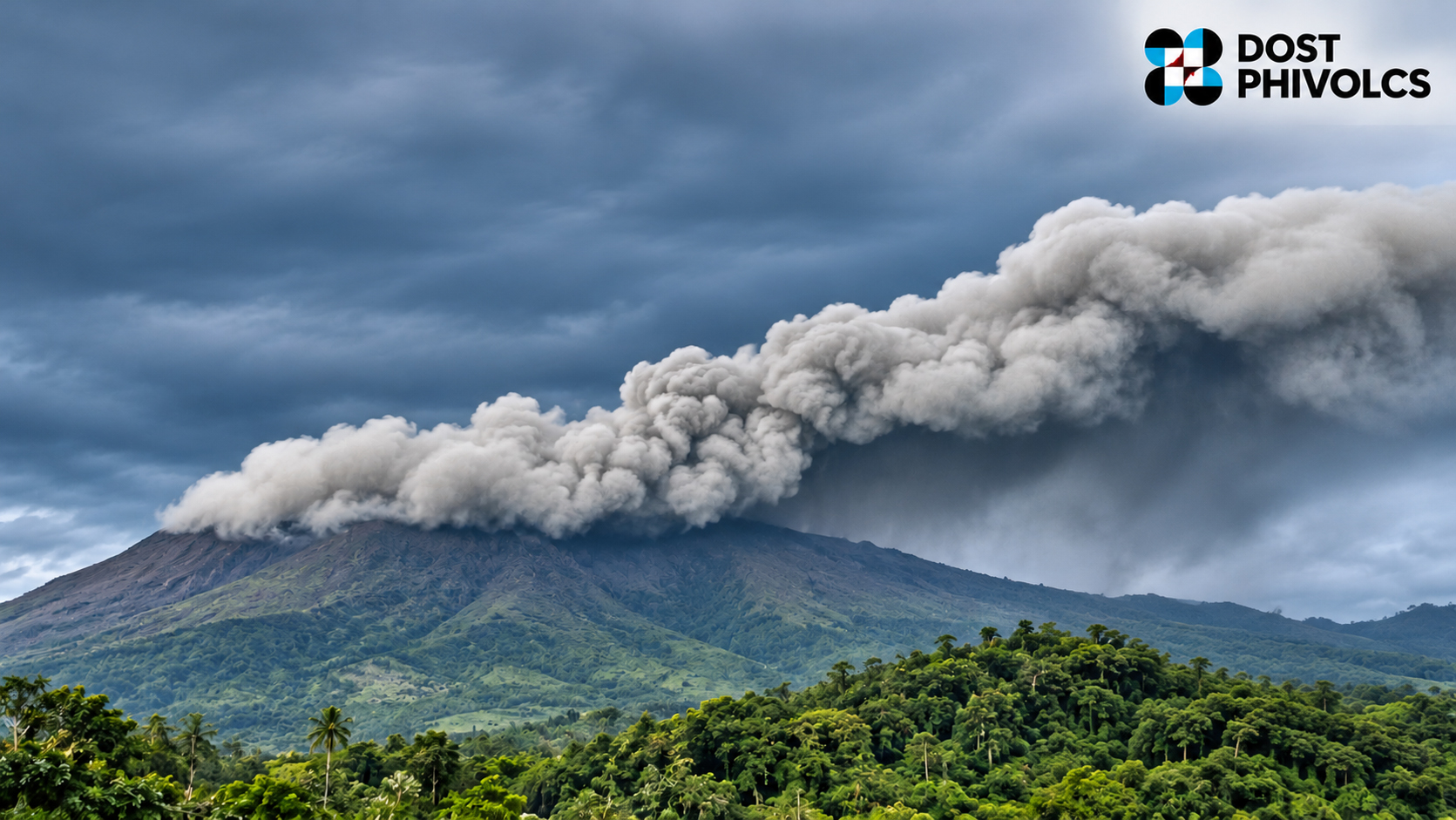
NEGROS ISLAND, Philippines — Kanlaon volcano ash emission was recorded early Friday morning, November 20, 2026, when a grayish plume rose approximately 200 meters above the summit crater on Negros Island, Philippines. According to a TV5 News report citing the Philippine Institute of Volcanology and Seismology (PHIVOLCS), the activity occurred at around 5:46 a.m. and was captured by the Kanlaon Volcano Observatory–Canlaon City monitoring camera. The volcano remains under Alert Level 2 as authorities continue monitoring volcanic unrest.
According to a TV5 News report citing PHIVOLCS, the ash emission occurred at approximately 5:46 a.m. and was recorded by the Kanlaon Volcano Observatory–Canlaon City (KVO-CC) monitoring camera.
The grayish plume reportedly rose about 200 meters above the volcano’s summit crater before being carried by winds toward the west-southwest.
The latest observation follows several ash emissions recorded earlier in November, highlighting the continued unrest at one of the Philippines’ active volcanoes.
Kanlaon Volcano Releases 200-Meter Ash Plume
The November 20 ash emission was observed through a monitoring camera operated by PHIVOLCS in Canlaon City.
Footage shared in the TV5 News report showed a grayish plume rising from the volcano’s summit area. The emission reached an estimated height of 200 meters before drifting in a west-southwest direction.
Although the event involved volcanic ash, the available information does not establish that a major explosive eruption occurred.
Ash emissions can happen during periods of volcanic unrest, and their significance depends on several factors, including seismic activity, gas emissions, ground deformation, and changes in volcanic behavior.
PHIVOLCS continues to monitor these indicators to assess whether conditions are becoming more unstable.
As of the report, there was no confirmed information about injuries, evacuations, or significant damage directly associated with the November 20 morning emission.
PHIVOLCS Maintains Alert Level 2
Despite the latest ash emission, Kanlaon Volcano remained under Alert Level 2, which indicates increased unrest.
This alert status means that the volcano is showing activity above its normal background conditions and that sudden volcanic events remain possible.
Under Alert Level 2, PHIVOLCS advises the public to stay outside the four-kilometer-radius Permanent Danger Zone surrounding the volcano.
The restriction is intended to protect residents, tourists, and other individuals from possible hazards near the summit, including sudden steam-driven explosions, volcanic gases, and falling volcanic materials.
Aircraft are also advised to avoid flying close to the summit because ash and other volcanic materials can pose risks to aviation.
The agency continues to emphasize the importance of following official monitoring updates and local government instructions.
Latest Monitoring Data Shows Continued Volcanic Unrest
In its November 20 monitoring bulletin, PHIVOLCS reported one volcanic earthquake during the previous 24-hour observation period.
The agency also recorded sulfur dioxide emissions of approximately 3,179 tonnes per day, based on measurements taken on November 19.
Sulfur dioxide is a volcanic gas released from magma and volcanic systems. Monitoring changes in gas emissions helps scientists evaluate volcanic activity, although a single measurement cannot reliably predict when an eruption might occur.
The bulletin also described a weak plume reaching approximately 100 meters and drifting westward.
This observation was separate from the 200-meter ash emission reported at 5:46 a.m. on November 20. The daily bulletin covered an earlier observation period, so the two plume measurements should not automatically be treated as conflicting reports.
Ground deformation observations also continued to indicate changes in the volcano’s structure.
Scientists examine these measurements alongside earthquake records and gas emissions to understand the condition of the volcanic system.
Several Ash Emissions Recorded Earlier in November
The latest activity follows a series of ash emissions reported at Kanlaon Volcano during November.
On November 16, PHIVOLCS recorded another ash emission that reportedly produced a plume reaching approximately 350 meters above the summit crater.
Earlier observations also documented ash emissions during the middle of the month, with some plumes reaching greater heights.
These incidents have kept attention on the volcano’s condition and the potential hazards faced by nearby communities.
However, repeated ash emissions do not necessarily mean that a larger eruption is imminent.
Volcanic activity can change over time, and scientists rely on several monitoring indicators rather than plume height alone when evaluating potential risks.
The continued occurrence of ash emissions nevertheless reinforces the need for regular monitoring and public awareness.
What Alert Level 2 Means for Nearby Communities
Alert Level 2 does not automatically require the evacuation of all communities surrounding Kanlaon Volcano.
However, it does indicate that residents should remain alert and follow restrictions established by PHIVOLCS and local authorities.
The four-kilometer Permanent Danger Zone remains off-limits because hazardous volcanic events can occur with limited warning.
Communities outside the restricted area may also need to prepare for possible ashfall if winds carry volcanic materials toward populated locations.
Ashfall can affect visibility, outdoor activities, water supplies, and respiratory health, particularly among children, older adults, and people with existing breathing difficulties.
Residents who experience ashfall are generally advised to remain indoors when possible, close windows and doors, and use appropriate protective masks when going outside.
Local disaster risk reduction and management offices may issue additional instructions depending on changing conditions.
Authorities Continue Monitoring Kanlaon Volcano
Kanlaon Volcano is located on Negros Island, along the boundary between Negros Occidental and Negros Oriental.
Its activity is monitored through instruments that measure earthquakes, volcanic gases, ground deformation, and visible emissions from the summit.
PHIVOLCS uses this information to issue bulletins, maintain or adjust alert levels, and provide warnings about potential volcanic hazards.
The agency’s monitoring is particularly important for communities located near the volcano, where changes in volcanic activity can affect daily life, agriculture, transportation, and public safety.
Although the November 20 emission was relatively limited in height compared with some earlier events, authorities continue to assess the volcano’s overall condition.
No change to Alert Level 2 was announced in the information available for this report.
Residents Advised to Follow Official Safety Updates
The latest ash emission serves as a reminder that volcanic activity can continue even without a major eruption.
Residents and visitors near Kanlaon are encouraged to monitor official PHIVOLCS announcements rather than rely on unverified social media claims.
People living near the volcano should also remain familiar with evacuation routes, emergency contacts, and instructions from their local disaster management offices.
If ashfall is observed, residents should take precautions to limit exposure and protect drinking water and household supplies.
The public should also avoid entering restricted areas for sightseeing or photography, even when the volcano appears calm.
Kanlaon Volcano Remains Under Close Observation
The November 20 ash emission adds to the recent volcanic activity recorded at Kanlaon, which continues to show signs of increased unrest.
While the plume reportedly reached approximately 200 meters and drifted west-southwest, the event has not been confirmed as a major eruption.
PHIVOLCS continues to maintain Alert Level 2 and enforce the four-kilometer Permanent Danger Zone.
For now, the priority remains public safety, continued scientific monitoring, and timely communication of any significant changes in volcanic conditions.
Further updates from PHIVOLCS and local authorities will help determine whether additional precautions are necessary for communities surrounding Kanlaon Volcano.

 Facebook
 Twitter