
By Henrylito D. Tacio
The first sign of trouble came not from the fields but from the irrigation canal.
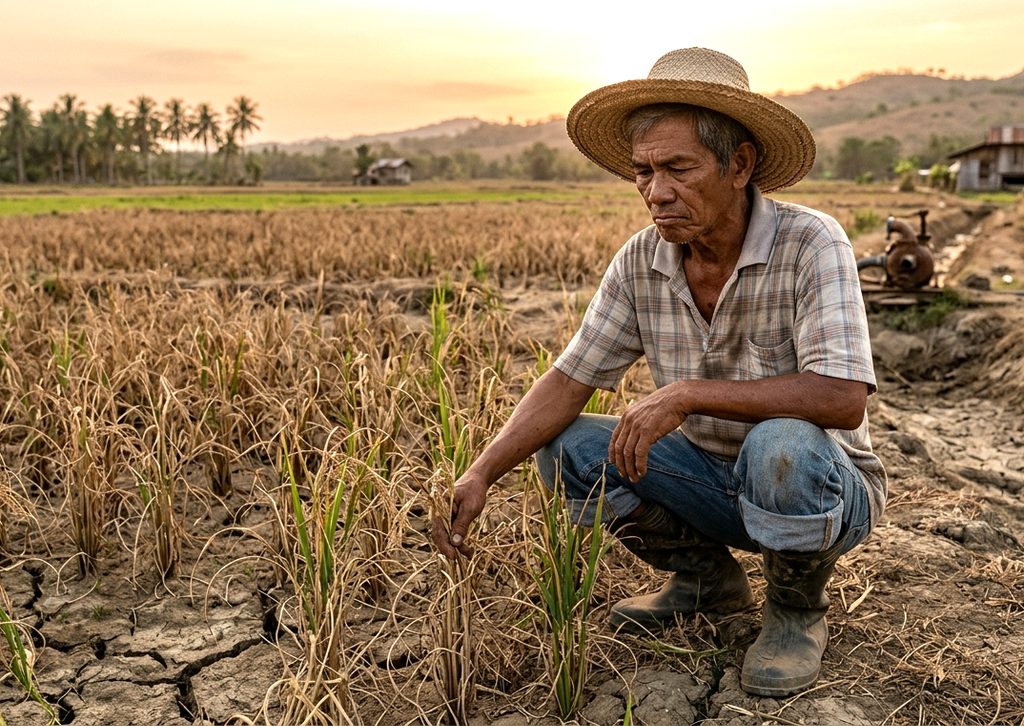
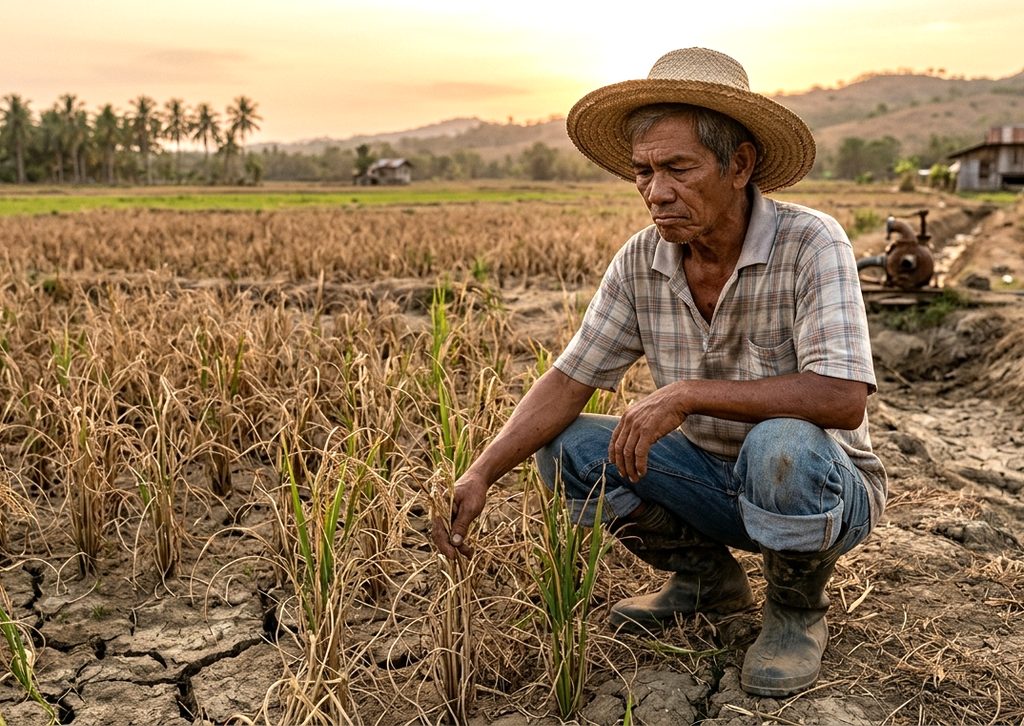
One summer morning in a farming village, a rice farmer walked nearly two kilometers to inspect the canal that had supplied water to his family’s farm for decades. What he found was a thin trickle creeping through cracked earth where rushing water once flowed. The rice seedlings he had planted weeks earlier were beginning to wilt under the scorching sun.
“We still have land,” he recalled telling a neighbor. “What we don’t have is water.”
That simple observation captures one of the greatest challenges facing humanity today. Across the Philippines and throughout the world, experts are increasingly warning that the future food crisis will not be caused primarily by a shortage of arable land but by a shortage of water.
Water, the most fundamental ingredient of life, is becoming increasingly scarce at the very time global demand for food is reaching unprecedented levels. As populations grow, incomes rise, and climate variability intensifies, competition for freshwater is escalating among agriculture, industry, and households.
The consequences could reshape the future of food production.
The Invisible Link Between Water and Food
“Water for agriculture is critical for food security,” points out Dr. Mark W. Rosegrant, senior research fellow of the International Food Policy Research Institute (IFPRI) in Washington, D.C.
Food security and water security are inseparable. While most people think of water primarily as something they drink, the largest share of freshwater is actually consumed in producing the food they eat every day.
The on-going drought is affecting rice production.
“The link between water and food is strong,” explains Lester R. Brown, president emeritus of the Earth Policy Institute. “We drink, in one form or another, nearly four liters of water per day. But the food we consume each day requires at least 2,000 liters to produce, 500 times as much.”
This concept, known as “virtual water,” refers to the enormous amount of water embedded in food production. Every grain of rice, every vegetable picked from the garden, every piece of meat served on the dining table carries with it a hidden water footprint.
In the Philippines, agriculture accounts for approximately 85% of total water use, while industries and households together consume only 15%.
“With the demand for water growing in all three categories, competition among sectors is intensifying with agriculture almost always losing,” Brown warns.
This trend is alarming because agriculture remains the backbone of food production. Without sufficient water, farmers cannot grow enough crops to feed expanding populations.
The High Cost of Every Grain and Every Bite
Few consumers realize how much water is needed to produce their food. According to the International Rice Research Institute (IRRI), producing one kilogram of rice requires about 3,000 liters of water. Considering that rice remains the staple food of most Filipinos, the implications are enormous.
Author John Robbins, in his book Food Revolution, provided equally eye-opening figures on water use in food production. He reported that producing one pound of lettuce requires 23 gallons of water, while tomatoes need 23 gallons, potatoes 24 gallons, carrots 33 gallons, and apples 49 gallons.
The numbers become even more staggering when livestock production is considered.
The Worldwatch Institute reports that about one-third of the freshwater used in agriculture goes toward growing grain intended for livestock feed.
Beef, pork, poultry, milk, and eggs all require significant quantities of water indirectly through feed production and directly through animal maintenance.
“Animals, including fish, consume a relatively small volume of water in comparison to crop consumption and can produce a very high value of output,” explains Dr. Ruth Meinzen-Dick, a development sociologist known for her extensive work on water management. “As worldwide demand for animal products increases, the importance of supplying water for aquaculture and livestock is also likely to increase.”
As populations become more urbanized and affluent, demand for meat and fish continues to rise, further increasing pressure on already limited freshwater supplies.
The Limits of the Green Revolution
Half a century ago, fears of widespread famine were temporarily pushed aside by the Green Revolution.
Through improved irrigation, chemical fertilizers, and high-yield crop varieties, agricultural productivity increased dramatically. Improved water management played a crucial role in this transformation.
The Food and Fertilizer Technology Center in Taipei noted that enhanced water management helped improve agricultural productivity or “crop per drop” by approximately 100% since 1960.
But many experts say the easy gains have already been achieved. “Farmers could no longer use the same strategies for raising food output which has fed millions in recent years,” Professor Jeffrey Sachs told participants at a Sustainable Development Summit in India.
Carabao taking a rest with a few waters in the rice field.
Since the agricultural revolution, the amount of irrigated land worldwide has tripled. Yet many regions, particularly in Asia, have already reached the limits of their available water resources.
“When water becomes short, rural farmers often find it difficult to maintain food supplies,” the New York-based United Nations Population Fund points out.
This reality is becoming increasingly evident in many agricultural regions where groundwater tables are declining and traditional water sources are shrinking.
Where Is the Water Going?
Water comes from two primary sources: underground aquifers and surface water bodies such as rivers, lakes, and reservoirs.
Groundwater, often described as nature’s savings account, is replenished slowly through rainfall and river seepage. However, in many regions, water is being extracted faster than nature can replace it. The result is a growing imbalance between supply and demand.
Adding to the challenge is climate change, which is disrupting rainfall patterns and increasing the frequency of droughts and extreme weather events.
When rain arrives too late, too intensely, or not at all, crops suffer. For farmers who depend on predictable weather patterns, these changes can mean the difference between a successful harvest and devastating losses.
Population Growth Adds Pressure
The water challenge becomes even greater as populations expand. Demographic projections have long shown the Philippines continuing to add millions of people to its population. Every additional citizen requires food, and every kilogram of food requires water.
“Water resources and population are closely connected,” said environmental journalist Don Hinrichsen, who has conducted extensive research on global water issues.
Supporting this view, Dr. Thierry Facon, former senior water management officer of the Food and Agriculture Organization’s regional office in Bangkok, notes that water use has been growing at more than twice the rate of population increase during the past century.
More people mean greater household water consumption, larger industrial requirements, and higher agricultural production targets.
Yet freshwater supplies remain finite.
Pollution: Destroying What We Already Have
Water scarcity is not caused only by natural shortages. Pollution is also reducing the amount of usable water. Several Philippine rivers have suffered severe degradation due to domestic, agricultural, and industrial wastes.
An Asian Development Bank report once noted that 16 rivers in the country were considered biologically dead during dry months. Domestic waste accounted for 48% of water pollution, agricultural waste 37%, and industrial waste 15%.
The effects extend far beyond water quality. “When water is polluted, fish and other aquatic resources can perish, which leads to a decline in fisheries production,” a World Bank report stated.
Pollution essentially shrinks the country’s usable water supply while simultaneously reducing the productivity of aquatic ecosystems that provide food and livelihoods.
Every Drop Matters
Experts agree that conservation must become part of everyday life. “People should adopt water conservation measures, everything from turning off the tap and fixing leaks, to the more efficient use of water for agriculture,” Hinrichsen suggests.
New technologies can play an important role. Drip irrigation systems, precision agriculture tools, moisture sensors, and improved irrigation scheduling can significantly reduce water losses. Farmers can often produce the same amount of food using far less water.
The International Water Management Institute emphasizes that improving water productivity in agriculture holds the key to addressing the growing global threat of water scarcity.
Simply put, societies must learn to grow more food with less water.
A Crisis at the Heart of Survival
Water is often overlooked because it flows silently through people’s daily lives. Yet without it, agriculture stops, food supplies shrink, ecosystems collapse, and economies suffer. “Water is the most precious asset on Earth,” says Dr. Sandra Postel, director of Global Water Policy. “It is the basis of life.”
Unlike oil, water has no substitute. “Water is not like oil; there is no substitute,” Dr. Rosegrant reminds us. “If we continue to take it for granted, much of the earth is going to run short of water or food, or both.”
As the world faces mounting environmental and demographic pressures, the challenge is no longer simply producing more food. It is finding enough clean water to produce that food sustainably.
Of all the crises confronting modern civilization, perhaps none is more fundamental. As former UNESCO Director-General Koichiro Matsuura once warned: “Of all the social and natural crises we humans face, the water crisis is the one that lies at the heart of our survival and that of our planet Earth.”

 Facebook
 Twitter