
Words and Photos by Henrylito D. Tacio
Delicious and juicy. These are the two adjectives most Filipinos instinctively use when describing lanzones—those small, golden, grape‑sized fruits that appear in markets and roadside stalls once the rainy months settle in.
But beyond its familiar sweetness lies a fruit with a long cultural memory, a storied past, and a quiet agricultural importance that continues to shape livelihoods across the archipelago.
Lanzones, known scientifically as Lansium domesticum, is native to tropical Southeast Asia. Philippine agricultural references note that the fruit was already present and cultivated in the country during prehistoric times.
In other words, lanzones arrived before written history, before colonial records, and before any single “discoverer” could claim credit. It is a fruit that has always been here—woven into the landscape, the forests, and eventually, the farms of generations.
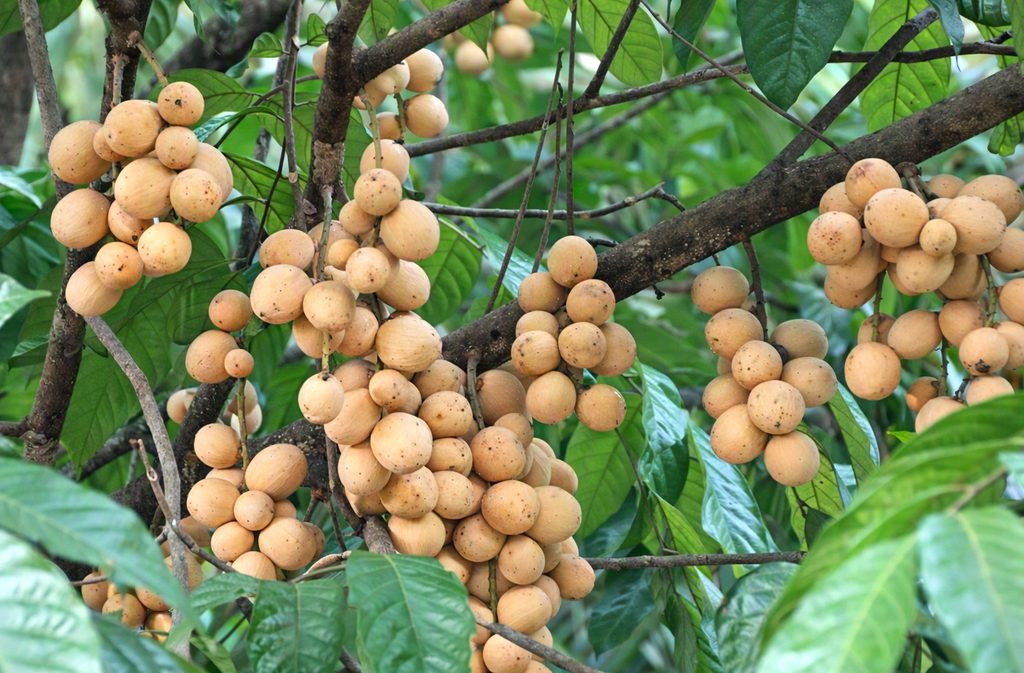
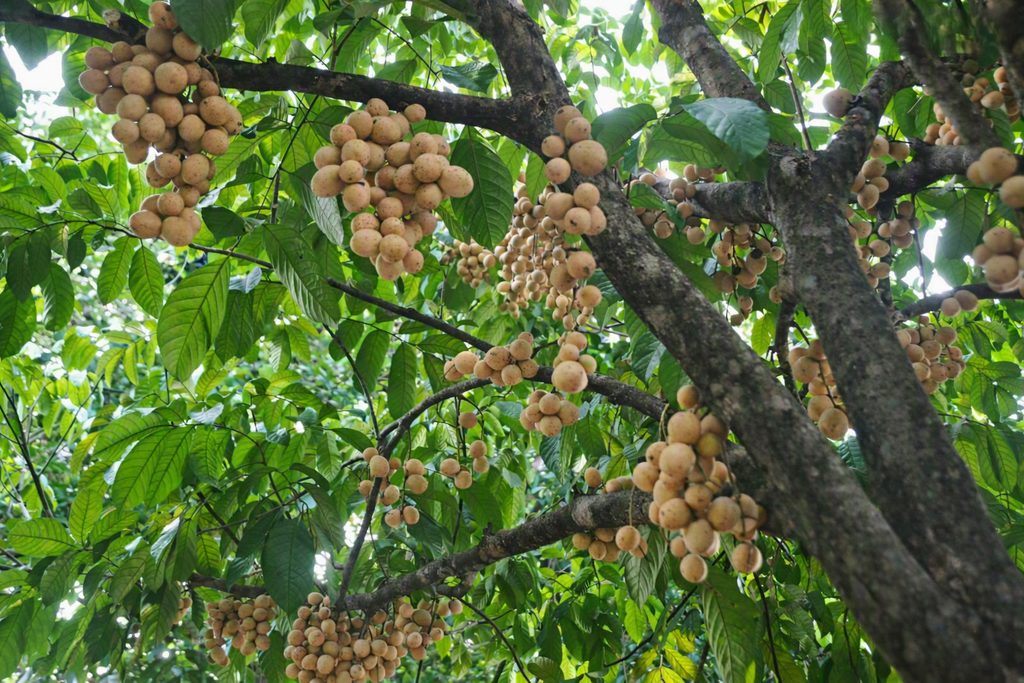
Today, lanzones sits comfortably among the country’s most beloved fruits, sold alongside durian, mangosteen, rambutan, and mango in markets from Luzon to Mindanao. Its appeal is simple: a clean sweetness, a translucent flesh that slips easily from its skin, and a flavor that manages to be both delicate and memorable.
A Farmer’s Treasure
“Lanzones is one of the most profitable and sought‑after fruit crops that our farmers could grow in their farms,” says Ian Ogatis, farm director of the Davao‑based Mindanao Baptist Rural Life Center. “The fruit is very saleable and is not as perishable as other fruit crops like papaya and atis.”
This durability is part of its charm. While many tropical fruits bruise easily or spoil quickly, lanzones travels well and keeps long enough for farmers to bring their harvest to town markets or regional trading posts. For smallholders, this reliability can mean the difference between profit and loss.
Lanzones is grown throughout the Philippines, but certain regions have become synonymous with the fruit. In Luzon, the sweet harvests of Laguna—particularly in Nagcarlan, San Pablo, Calauan, and Liliw—are well‑known. Quezon and Batangas also contribute significantly to supply.
In Mindanao, the top producers include Camiguin, Davao del Norte, Davao City, Zamboanga del Norte, and Sulu.
Local varieties add to the diversity of flavors. The native Paete lanzones is prized for its sweetness, while grafted strains like longkong—originally introduced from Thailand and Malaysia—have become popular for their larger size and thinner skin. Although imported‑sounding labels like “Thai lanzones” occasionally appear in fruit stands, the vast majority of lanzones consumed in the Philippines is grown domestically.
Seasons of Sweetness
In southern Tagalog, the lanzones season runs from August to October. In Mindanao, peak harvest occurs from July to November, with secondary fruiting sometimes appearing from January to April. These months transform certain towns into bustling fruit hubs, none more famous than Mambajao in Camiguin.
Every October, Camiguin celebrates the Lanzones Festival—a weekend of street dancing, parades, pageants, and cultural tableaux. The festival showcases agri‑cottage products, barangay beautification contests, indigenous sports, and a grand parade honoring the golden fruit that has become the province’s pride. For visitors, the festival is a sensory feast; for locals, it is a celebration of identity and abundance.
A Legend from Paete
Part of the fruit’s mystique comes from a legend that originated in Paete, Laguna—a tale retold in Filipino children’s books and preserved in Dean S. Fansler’s Filipino Popular Tales. The story goes:
“Once upon a time the fruit of the lanzones tree was very poisonous. Its very juice could make a man sick until he dies. One day a very religious old man was passing through a forest to attend the fiesta of a neighboring town. When he reached the middle of the thick forest, he became very hungry and tired and felt he could go no further. No matter where he looked, he could see nothing but the poisonous lanzones. So he lay down on the soft grass.
“Hardly a moment had passed when a being from heaven approached him and said, ‘My good Christian pilgrim, take some of these lanzones fruits, eat them, and you will be much relieved.’ At first the old man would not do it but the heavenly being pinched the fruit with her fingers and handed them to the pilgrim. He then ate and soon his hunger was removed. After thanking heaven, he continued on to his pilgrimage. Ever since that time, lanzones have been good to eat. All fruits still bear the marks of the heavenly being’s fingers.”
Whether taken as folklore or metaphor, the story adds a layer of enchantment to the fruit—an explanation for the small brown marks on its skin, and a reminder of how deeply lanzones is embedded in Filipino imagination.
More Than Just a Fruit
Lanzones is primarily enjoyed fresh, peeled and eaten as a table fruit. But it has other uses. Peeled fruit can be preserved in boiled sugar syrup, and its size and clarity make it ideal for candying. Some communities have even produced wine from lanzones, taking advantage of its natural sweetness.
The tree itself is also valuable. Its wood, clear brown and elastic, can be made into tools and small decorative objects. The cortex has medicinal value and is used in Malaysia and Indonesia to treat dysentery and malaria.
In Java, the bitter seeds are milled and used to treat fever. Resin from the bark may be prescribed for flatulence, swellings, and as an antispasmodic. Dried fruit rind, when burned, is said to drive away mosquitoes, and its smoke reportedly soothes tubercular patients.
Growing the Golden Fruit
Lanzones can be propagated by seeds or through asexual methods such as marcotting, inarching, or grafting. The Bureau of Plant Industry recommends cleft‑grafting as the most practical method, noting that grafted trees bear fruit earlier.
Although generally undemanding, lanzones does not thrive in very dry areas or extremely alkaline soils. It prefers well‑drained, slightly acidic to neutral soil rich in organic matter. Poor drainage is particularly harmful; in areas with high water tables, the roots rot quickly.
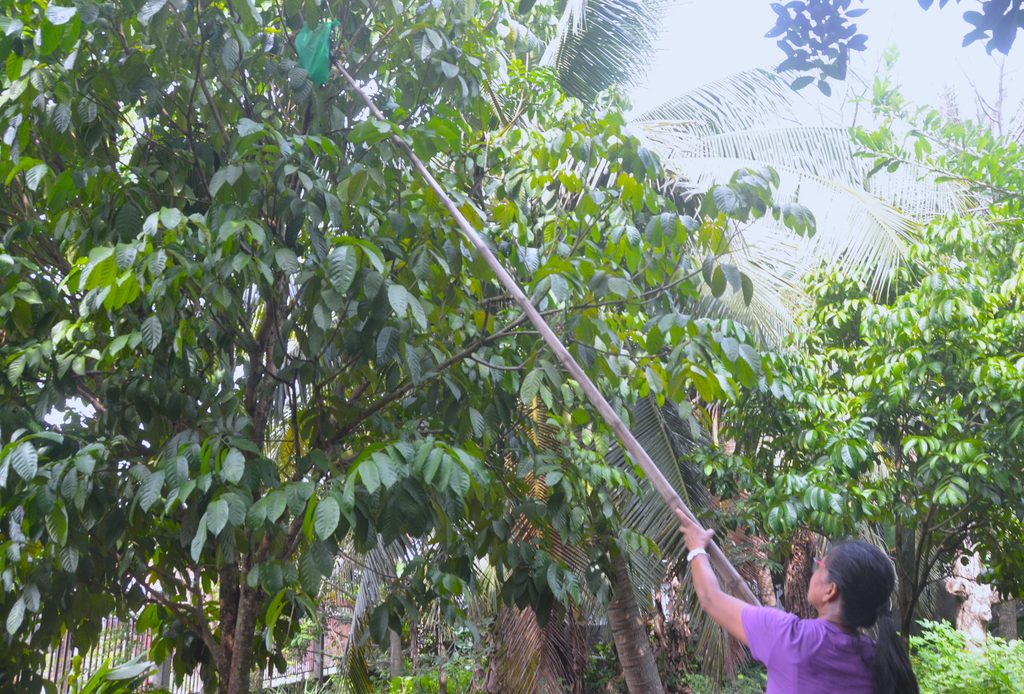
Seed‑grown trees begin flowering at 12 to 15 years, while marcotted trees bear fruit in two to four years. Fruits are harvested five to six months after flowering, typically using a sharp knife to detach the clusters.
A Fruit That Endures
In a country blessed with an abundance of tropical fruits, lanzones holds its own—not through flamboyance, but through quiet consistency. It is a fruit that has nourished generations, inspired festivals, sustained farmers, and sparked legends. Its sweetness is familiar, comforting, and unmistakably Filipino.
Perhaps that is why, when the first clusters appear in markets each year, people pause. They buy a bundle, peel a fruit, and taste once again the soft, translucent flesh that has delighted families for centuries. In that moment, the forest turns to gold, and the humble lanzones reminds us that some of the country’s greatest treasures fit easily in the palm of a hand

 Facebook
 Twitter