
Words and Photos by Henrylito D. Tacio
(Second of Two Parts)
Ten days before Christmas in 2018, what began as an ordinary farming errand became a heartbreaking encounter with one of the country’s greatest conservation challenges.
At around 9:00 in the morning, Dodoy Rodriguez left his home in Barangay Lanao Kuran to deliver tomatoes to Arakan, Cotabato. As his motorcycle passed through Barangay Tumanding, something unusual caught his eye.
From a distance, it looked like a white sack lying on the grass beside the road. Curious, Rodriguez stopped his motorcycle and walked closer. What he found was no sack. “It was lying on its back,” Rodriguez recalled. “Ants already swarmed on the carcass, but its body was still warm.”
The large bird’s cotton-white underside faced the sky. A closer inspection revealed burns on its left wing and right foot.
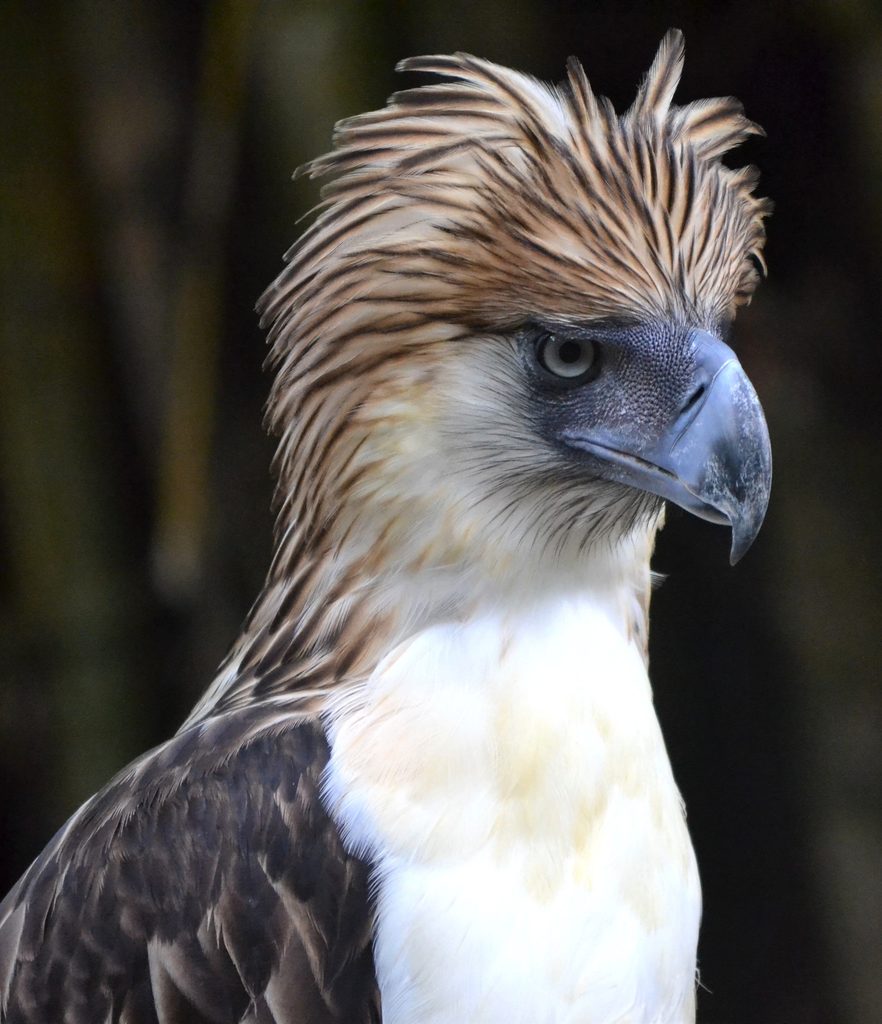
Rodriguez immediately realized he was looking at something extraordinary. It was not an ordinary bird but a Philippine eagle, the country’s national bird and one of the world’s rarest raptors.
Knowing the discovery was significant, he brought the carcass to a forest guard, who promptly informed the Philippine Eagle Foundation (PEF).
His chance encounter would reveal yet another threat facing an already critically endangered species.
Death by electricity
An examination conducted by veterinarian consultant Ana Lascano of the Philippine Eagle Foundation uncovered disturbing evidence.
The young male eagle had suffered severe burns on its left wing and right foot. The wing carried a compound fracture, while a hole measuring about one centimeter in diameter punctured the bird’s footpad.
More alarming was what Lascano discovered internally.
The eagle’s heart and nearby blood vessels had ruptured.
Based on the injuries and the location where the bird was found, she concluded that the eagle had likely been accidentally electrocuted.
The necropsy report noted that the bird’s body lay only about a meter away from a concrete electric post operated by the Cotabato Electric Cooperative.
Electrical engineer Floro Baguec Jr. later examined photographs from the site and offered a likely explanation.
The pole carried an exposed, non-insulated secondary line transmitting 220 volts of electricity.
“The bird apparently came in contact with the two exposed wires simultaneously, and the full voltage passing through its body caused its death,” Baguec explained.
What happened that day was not merely an accident. It was another painful chapter in the continuing struggle to save a species hovering dangerously close to extinction.
Voice of a disappearing wilderness
There was a time when Philippine eagles soared freely above the forests surrounding Mount Apo. Their enormous wings commanded the skies, inspiring awe among those fortunate enough to witness them.
Today, such sights have become increasingly rare. The Philippine eagle, scientifically known as Pithecophaga jefferyi, is listed among the world’s most endangered birds. In fact, Current Biology also listed the eagle as among the 100 most evolutionarily distinct and endangered bird species worldwide.
“This is truly a dubious distinction for our national bird,” lamented PEF executive director Dennis Joseph Ilustre Salvador.
If the Philippine eagle could speak, perhaps it would tell humanity a story of vanishing forests, dried-up rivers, devastating floods, raging wildfires, and disappearing wildlife. It would remind us that its fate is inseparable from our own. “I am a storyteller, and I want you to listen before it’s too late.”
Those imagined words carry a sobering truth. The eagle’s struggle reflects the broader crisis confronting Philippine forests and biodiversity.
The cost of losing forests
Conservationists identify habitat destruction as the greatest threat to the Philippine eagle. “The Philippine eagle has become a critically endangered species because the loss of the forest has made it lose its natural habitat,” Salvador stressed.
Unlike many birds, the Philippine eagle needs vast areas of forest to survive.
A breeding pair requires between 7,000 and 13,000 hectares of forest territory. Each pair depends on extensive hunting grounds to find enough food and successfully raise offspring.
Scientific American notes that some breeding pairs may require territories covering as much as 40 square kilometers.
As forests shrink, so do the eagles’ chances of survival.
According to Global Forest Watch, the Philippines retains roughly seven million hectares of forest cover, representing only about 24% of the country’s total land area. Even those remaining forests may support only a limited eagle population.
Dr. Jayson C. Ibanez, director of PEF’s Research and Conservation Division, estimates that the country’s remaining suitable habitats can support an average of only 392 pairs of Philippine eagles.
“The maximum number of pairs that the sustainable predicted suitable forest habitat can possibly contain is 447 pairs,” he said.
Yet even those figures may be optimistic. Some forests that appear healthy may no longer harbor eagles at all.
Beyond habitat loss
Deforestation is not the only enemy. Illegal hunting and shooting continue to exact a deadly toll. “At least one Philippine eagle is killed every year because of shooting,” the PEF reported.
Disease presents another serious challenge. Studies conducted on both wild-caught and captive-bred eagles revealed deaths from infectious diseases, metabolic disorders, trauma, congenital abnormalities, pneumonia and, ironically, electrocution.
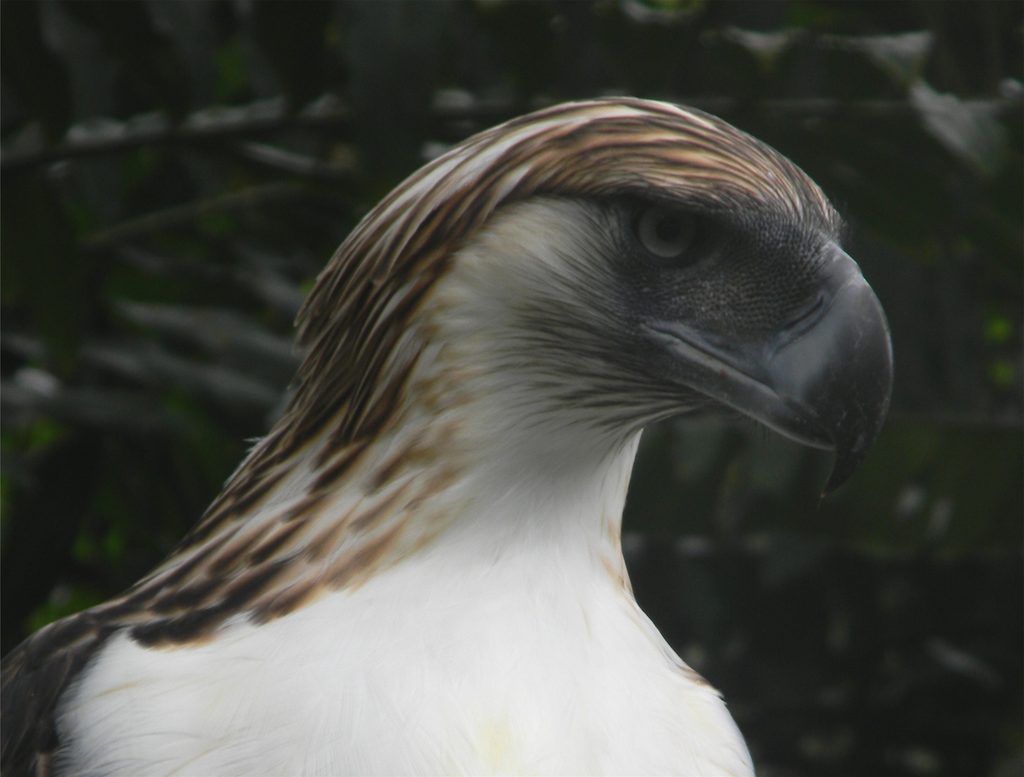
More recently, conservationists have become increasingly concerned about the threat posed by Highly Pathogenic Avian Influenza, better known as bird flu. “All it takes is a single case of infection and the only captive breeding population in the world of this already critically endangered species would be completely eradicated,” PEF warned.
To reduce that risk, the foundation transferred its breeding operations to a safer location in Barangay Eden, Toril.
Saving the world’s noblest flier
American aviator Charles Lindbergh once called the Philippine eagle “the world’s noblest flier.” The description remains fitting today.
Larger than the American bald eagle and surpassed in size only by a few raptors worldwide, the Philippine eagle embodies the grandeur and diversity of the country’s natural heritage. In 1995, President Fidel V. Ramos officially declared it the national bird of the Philippines.
Yet that honor alone cannot ensure its survival.
The road to recovery requires stronger forest protection, safer power infrastructure, stricter enforcement against wildlife hunting, and continued public support for conservation programs.
The dead eagle discovered beside a roadside in Cotabato serves as a powerful warning. Its death was not simply the loss of a bird.
It was the loss of a potential breeder, a guardian of the forest, and a living symbol of the country’s wilderness.
Whether future generations will continue to see Philippine eagles soaring above the forests depends on the choices Filipinos make today.
For the world’s noblest flier, time is running out.

 Facebook
 Twitter