
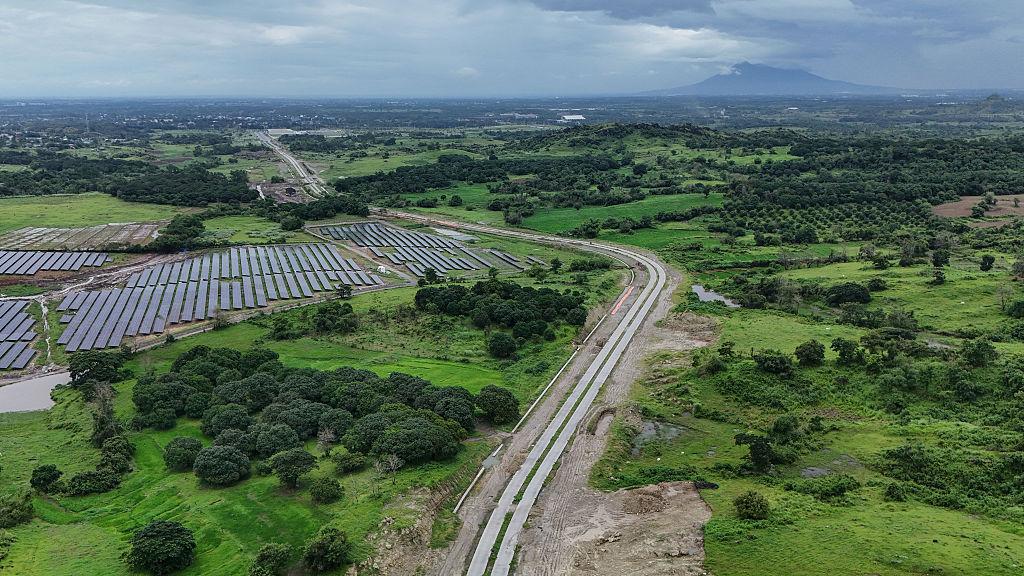
The Pax Silica project in Tarlac is drawing attention over its potential impact on agricultural land and local communities, prompting Malacañang to assure farmers and Indigenous Peoples (IPs) that their interests will be considered as the government prepares the development’s legal framework.
Malacañang has assured farmers and Indigenous Peoples (IPs) that their interests will be considered in the proposed Pax Silica development in New Clark City, Tarlac, amid continuing concerns about the project’s potential effects on agricultural land, local livelihoods, and ancestral communities.
The Palace made the assurance on Wednesday as the government prepares to finalize the legal framework for the proposed industrial hub, which is expected to attract investments in artificial intelligence (AI), semiconductor manufacturing, and other advanced technology industries.
Palace Press Officer Claire Castro said the government would ensure that farmers and Indigenous communities would not be neglected or displaced by the development. She also pointed to the government’s plans to provide assistance to residents who may be affected by the project.
The proposed development forms part of the Philippines’ participation in Pax Silica, a United States-led initiative aimed at strengthening international cooperation in AI and critical technology supply chains.
Government Identifies Areas for Development
The proposed industrial hub is expected to cover approximately 4,000 acres, equivalent to around 1,619 hectares, within New Clark City in Capas, Tarlac.
Malacañang previously explained that the project site falls within designated buildable areas under the city’s development plan.
Castro said approximately 3,500 hectares had been identified as buildable zones, while another 6,000 hectares were reserved for open green spaces, forest reserves, and planned agricultural activities.
The government has maintained that the project would occupy only a portion of the designated development area.
The Bases Conversion and Development Authority (BCDA), which oversees the development of New Clark City, has also said the proposed industrial hub would be located outside designated ancestral domains.
The agency has cited livelihood and employment opportunities as part of its plans to support communities in the area.
Farmers and Indigenous Communities Raise Concerns
Despite government assurances, the proposed development has drawn questions from farmers, Indigenous communities, environmental groups, and local officials.
One major concern involves the potential loss of agricultural land and its effect on families who depend on farming for their income.
In September, the Department of Agriculture reported that approximately 266 farmers cultivating 410 hectares could be affected by the project.
Agriculture Secretary Francisco Tiu Laurel Jr. said the government would seek alternative planting areas for affected farmers and provide initial assistance, including seeds and fertilizer.
The proposed assistance is intended to help farmers continue their agricultural activities while the development moves forward.
However, some farmers and Aeta community representatives have also expressed concerns about their homes, access to water, and the long-term effects on their livelihoods.
In previous public statements, community representatives questioned whether the economic opportunities promised by the project would benefit residents whose livelihoods are closely tied to agriculture.
Water Supply and Environmental Impact Remain Issues
The project’s potential demand for water and electricity has also become part of the public discussion.
BCDA has said the development would use water management measures, including surface water collection, storage, treatment, and recycling. The agency has also discussed possible desalination facilities.
Environmental advocates and some local stakeholders, however, have called for more information about the project’s resource requirements and its potential effects on nearby communities.
Capas Mayor Roseller Rodriguez previously sought discussions with BCDA, citing the need for local government consultation over possible environmental and community impacts.
These concerns highlight the importance of transparent assessments and consultations before major construction activities begin.
Legal Framework and Implementation Still Pending
The government is preparing the legal framework and agreements that will govern the proposed Pax Silica development.
BCDA has said the project is intended to attract high-value industries and generate employment opportunities in the Philippines, particularly in advanced manufacturing and technology-related sectors.
Government officials have also emphasized that the project must comply with existing Philippine laws and environmental regulations.
The final arrangements will be important in determining how land use, environmental safeguards, community consultations, and assistance for affected residents will be implemented.
Balancing Investment and Community Protection
The proposed Pax Silica project represents an opportunity for the Philippines to participate more actively in the global technology and semiconductor industries.
However, its potential economic benefits must also be considered alongside the concerns of communities living and working near the proposed development site.
The government’s assurances will need to be supported by clear policies, transparent assessments, and meaningful consultations with affected stakeholders.
For farmers and Indigenous communities in Capas, the outcome will depend not only on the project’s investment and employment prospects but also on how their land rights, livelihoods, and access to natural resources are protected.
As the government moves toward finalizing the project’s legal framework, the concerns of local communities are expected to remain an important part of discussions surrounding its implementation.

 Facebook
 Twitter