
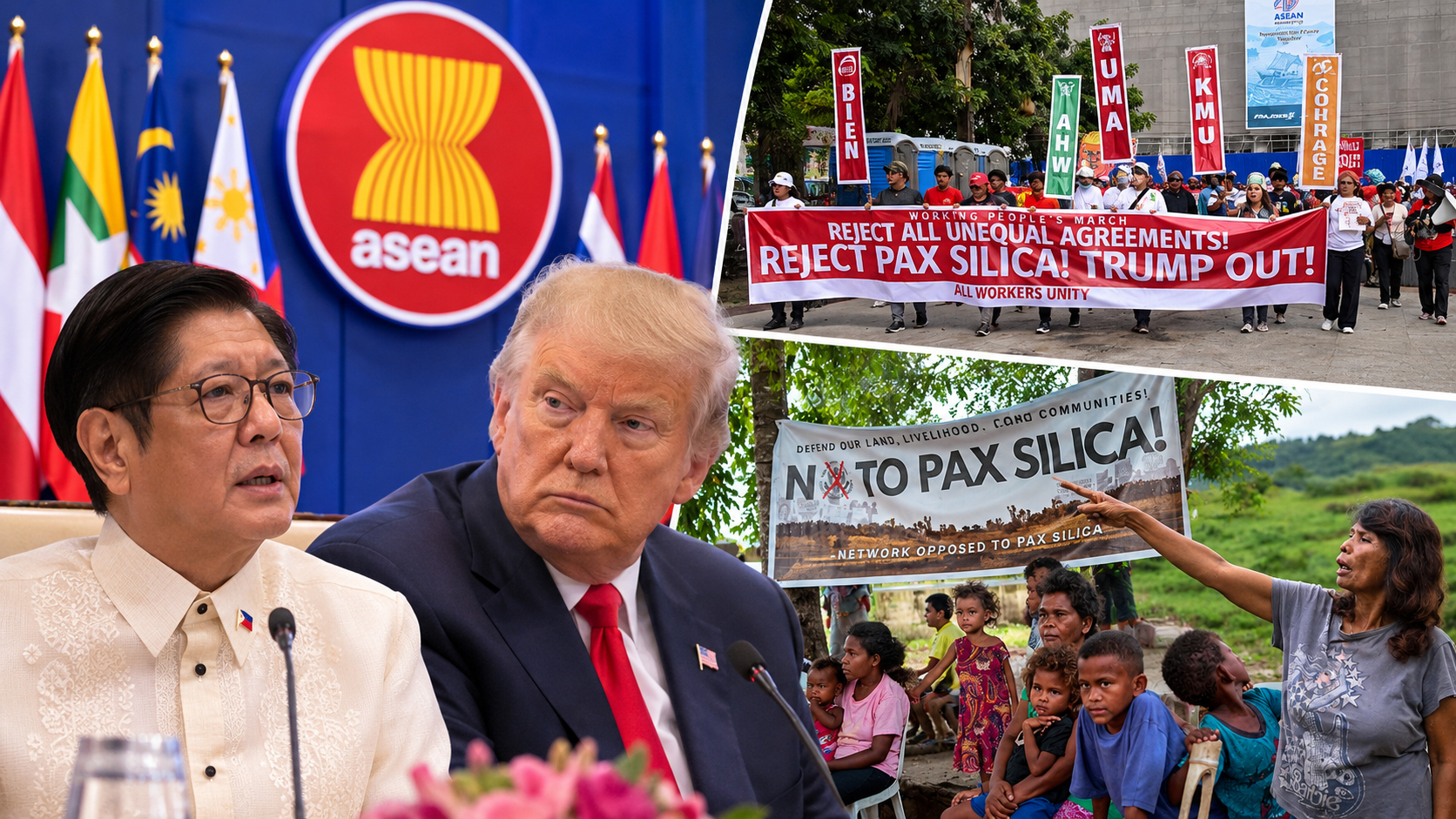
MANILA, Philippines — President Ferdinand Marcos Jr. has confirmed that no Pax Silica agreement will be signed during United States President Donald Trump’s visit to the Philippines for the ASEAN Summit in November 2026.
The clarification came amid discussions about the proposed US-led technology and semiconductor supply-chain initiative, which aims to strengthen cooperation in advanced manufacturing, artificial intelligence, and critical minerals.
Speaking to reporters at Malacañang on November 18, Marcos said the signing of a Pax Silica agreement was not included in the agenda for Trump’s visit.
US Ambassador to the Philippines Lee Lipton also confirmed that no signing ceremony had been scheduled.
The announcement does not necessarily mean that the Philippines has withdrawn from the initiative, as discussions regarding future cooperation remain ongoing.
Marcos Clarifies Pax Silica Agreement Status
Marcos explained that the proposed agreement would not be finalized during Trump’s visit, indicating that it was not among the matters scheduled for the bilateral engagement.
The clarification followed public speculation about whether the Philippines and the United States would formalize additional commitments under Pax Silica during the ASEAN-related meetings.
Philippine officials have previously expressed interest in expanding cooperation with the United States in technology development, semiconductor manufacturing, and investment.
However, the government has not announced a confirmed signing date for the proposed agreement.
The Department of Trade and Industry earlier indicated that negotiations were progressing, with officials targeting a possible agreement before the end of 2026.
Whether that timeline will be maintained remains uncertain.
What Is the Pax Silica Initiative?
Pax Silica is a US-led international initiative focused on strengthening cooperation in strategic industries, particularly semiconductors, artificial intelligence, advanced manufacturing, and critical mineral supply chains.
The initiative seeks to improve supply-chain security and encourage investment among participating countries.
The Philippines joined the broader Pax Silica initiative in April 2026, becoming its 13th signatory.
Participation is viewed by government officials as an opportunity to strengthen the country’s position in regional and global technology industries.
The Philippines already plays a role in semiconductor assembly, testing, and electronics manufacturing.
Additional cooperation under the initiative could support industrial expansion, technology development, and workforce opportunities.
However, the potential economic benefits will depend on actual investments, project implementation, and long-term industry development.
Proposed Technology Hub in New Clark City
One of the major developments associated with Pax Silica discussions is a proposed technology and industrial hub in New Clark City, Tarlac.
The project has been presented as a possible location for semiconductor-related industries, advanced manufacturing facilities, and other technology investments.
Government projections cited in earlier reports suggested that the proposed development could cover approximately 4,000 acres and potentially generate more than 130,000 jobs.
Estimated investment opportunities have been placed between $40 billion and $70 billion.
However, these figures represent projections rather than confirmed investments or employment already generated.
The final project scope, funding arrangements, implementation schedule, and participating companies have not been fully established in publicly available reports.
Officials have emphasized that the proposed development could help attract international investors and support the Philippines’ long-term industrial growth.
Environmental and Community Concerns Raised
Despite the potential economic opportunities, the proposed Pax Silica-related development has also drawn concerns from environmental organizations, farmers, and Indigenous communities.
Some groups have questioned the possible effects of large-scale industrial expansion on agricultural lands, ancestral territories, and surrounding communities.
Environmental advocates have also raised concerns about the electricity and water requirements of advanced manufacturing facilities.
These issues have prompted calls for greater transparency regarding project planning, environmental assessments, and consultations with potentially affected residents.
Government representatives have maintained that development plans would consider appropriate land-use requirements and community safeguards.
However, the extent of those protections and the final environmental implications will depend on the project’s approved plans and implementation.
Pax Silica Becomes Issue During ASEAN Protests
The proposed initiative has also become part of broader public discussions surrounding Trump’s visit to the Philippines.
During demonstrations connected to the ASEAN Summit, some protesters raised concerns about foreign economic influence, land rights, and the possible effects of international development agreements on local communities.
Pax Silica was among the issues mentioned by groups opposing certain aspects of the proposed cooperation.
Supporters of stronger Philippine-US economic relations, meanwhile, have emphasized the potential benefits of foreign investment, technological cooperation, and expanded manufacturing opportunities.
These differing positions reflect broader debates about how the Philippines should balance economic development, international partnerships, environmental protection, and community interests.
The absence of a signing ceremony during Trump’s visit does not resolve these concerns, as discussions about the proposed development may continue.
Philippines and US Continue Economic Cooperation
The Philippines and the United States maintain longstanding diplomatic, security, and economic relations.
Technology development and semiconductor supply chains have become increasingly important areas of international cooperation as countries seek to strengthen access to strategic materials and manufacturing capabilities.
For the Philippines, participation in international technology initiatives could provide opportunities to attract investment and improve industrial competitiveness.
However, the success of such partnerships will depend on clear agreements, effective implementation, regulatory oversight, and the ability to deliver measurable economic benefits.
Government officials have not indicated that the decision to exclude the Pax Silica signing from Trump’s visit represents a change in the broader relationship between Manila and Washington.
What Happens Next for Pax Silica?
With no signing scheduled during the ASEAN visit, attention will turn to the next steps in negotiations between Philippine and US officials.
The Department of Trade and Industry previously expressed optimism about reaching an agreement before the end of 2026.
However, no final signing date has been publicly confirmed.
Further announcements may clarify the proposed industrial hub’s investment commitments, development timetable, environmental safeguards, and expected benefits for local communities.
For now, the Philippine government’s position remains that no additional Pax Silica agreement will be signed during Trump’s November visit.
The development highlights the continuing discussions surrounding international technology cooperation and the Philippines’ efforts to expand its role in advanced manufacturing.
As negotiations continue, the final terms of any agreement will be important in determining its potential economic, environmental, and social effects.
The outcome will depend on future decisions by Philippine and US officials, as well as the completion of any necessary regulatory and project approval processes.

 Facebook
 Twitter