
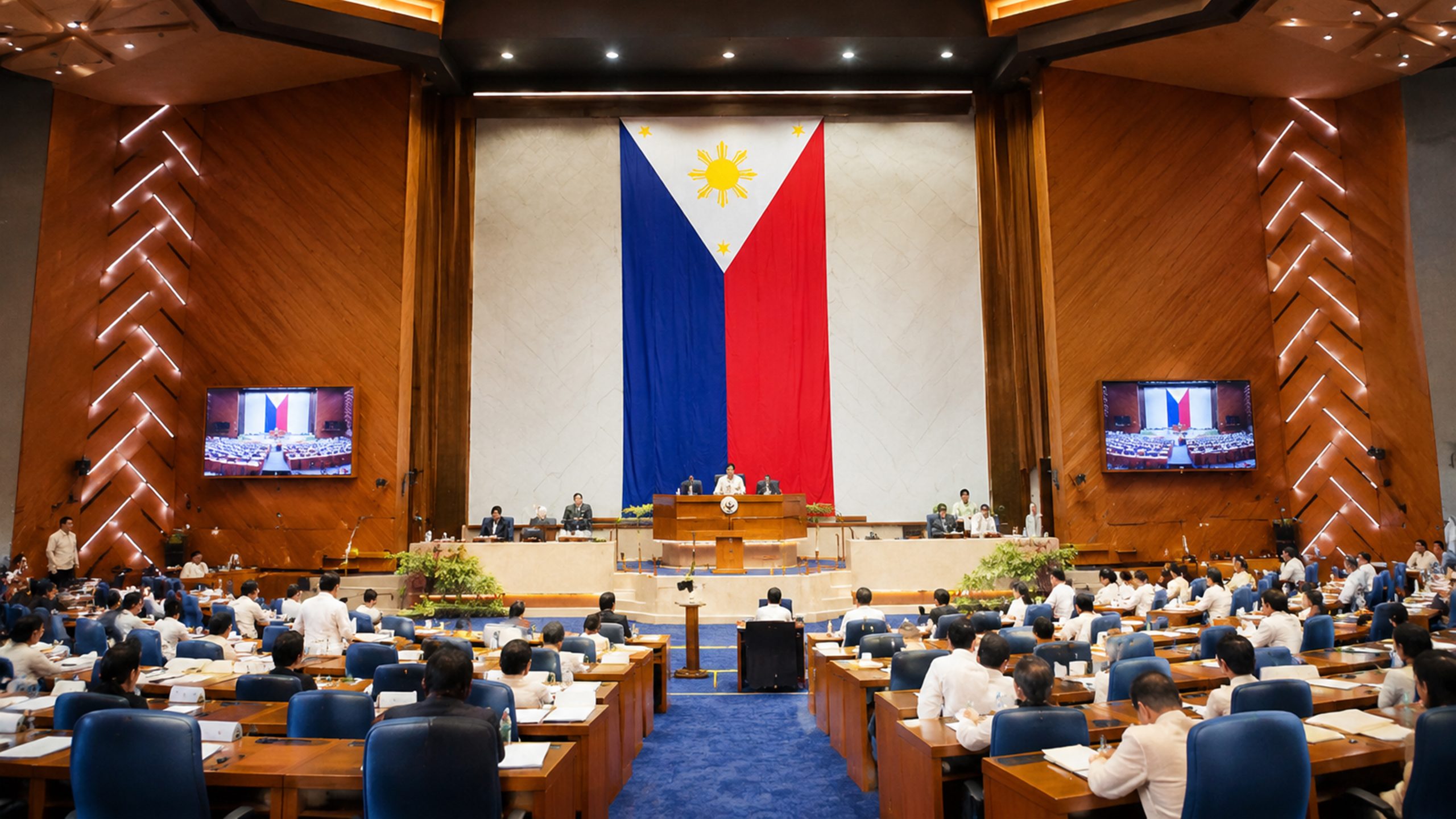
The Sara Duterte 2028 no-election claim has sparked political controversy after the Vice President’s camp raised concerns about an alleged plan to cancel the next national elections. House impeachment prosecutors and lawmakers have rejected the allegation, insisting that no such proposal has been discussed in the House of Representatives and urging Duterte’s camp to address the accusations against her in the ongoing impeachment proceedings.
The controversy emerged after Duterte’s spokesperson, lawyer Paolo Panelo Jr., reportedly raised concerns about a possible no-election scenario in 2028, including the alleged extension of incumbent officials’ terms and a potential shift from a presidential to a parliamentary form of government.
Panelo claimed that Duterte had received information suggesting that such a scenario was being discussed in the House of Representatives. However, he did not publicly identify the lawmakers allegedly involved or present documentary evidence confirming the supposed discussions.
Manila Representative Joel Chua, one of the House prosecutors in Duterte’s impeachment case, rejected the allegation, saying the Vice President’s camp should concentrate on answering the accusations presented against her before the Senate impeachment court.
Chua argued that raising unrelated political issues would only distract the public from the impeachment trial.
“Alam po ninyo, tigilan na nila ‘yung mga kung ano-anong mga pinagsasabi nila. Siguro mas makabubuti pa sagutin na lang nila ‘yung allegations dito, hindi ‘yung kung ano-anong isyu ang ginagawa nila para malihis ‘yung mga usapin,” Chua said.
Adiong Denies Discussions on Canceling 2028 Elections
Lanao del Sur Representative Zia Alonto Adiong also rejected the allegation, denying that the House of Representatives had discussed postponing or canceling the 2028 national elections.
Adiong, who chairs the House Committee on Suffrage and Electoral Reforms, questioned the basis of the claim and maintained that no such proposal had been considered by the chamber.
He said the House was instead focused on electoral reform matters, including proposals involving the party-list system and political dynasties.
Adiong also urged the Vice President’s camp to avoid making allegations without supporting evidence.
His statement is significant because his committee handles matters concerning the country’s electoral system and proposed election-related reforms.
Palace Also Rejects the No-Election Allegation
Malacañang likewise dismissed the reported possibility of canceling the 2028 elections.
Presidential Communications Office Undersecretary Claire Castro questioned the credibility of the allegation and defended the government’s commitment to the constitutional election schedule.
The Palace’s position reinforces the administration’s rejection of claims that there is an ongoing plan to suspend the next national elections.
Impeachment Trial Focuses on Alleged ₱817.87 Million in Unexplained Wealth
The controversy comes as Duterte faces impeachment proceedings involving allegations of unexplained wealth and prohibited business participation.
The House prosecution has presented financial evidence alleging that the Vice President accumulated approximately ₱817.87 million in unexplained wealth from 2022 to 2025.
The allegations are included in Article II of the impeachment complaint, which concerns alleged violations involving unexplained wealth and business interests.
The prosecution’s financial presentation reportedly involved documents relating to bank transactions, corporate interests, property records, tax information and Statements of Assets, Liabilities and Net Worth.
The amount represents the prosecution’s allegations and has not been established as a finding of guilt by the impeachment court.
Duterte’s defense has disputed the prosecution’s conclusions, particularly its methodology for calculating the alleged unexplained wealth.
Defense Witness Challenges Prosecution’s Financial Analysis
During the November 19 proceedings, the defense presented lawyer and certified public accountant Rainer Dela Fuente, a former Anti-Money Laundering Council employee, to challenge the prosecution’s financial findings.
Dela Fuente questioned the assumptions used by the prosecution’s financial expert, particularly in attributing corporate assets and expenses to individual shareholders.
He argued that assets belonging to corporations should not automatically be treated as personal wealth of their shareholders.
The defense also raised questions about the use of certain receipts, insurance expenses and corporate payments in calculating the alleged unexplained wealth.
However, Dela Fuente acknowledged that he had not received the complete financial report prepared by the prosecution’s expert before giving his testimony.
The defense maintains that the prosecution’s calculations are unreliable, while prosecutors continue to stand by their financial evidence.
What the Constitution Says About the 2028 Elections
Under Article VII, Section 4 of the 1987 Philippine Constitution, regular presidential and vice-presidential elections are held on the second Monday of May.
The next scheduled national elections are set for May 8, 2028.
Any proposal to fundamentally change the country’s political system, including a shift from a presidential to a parliamentary system, would require compliance with the constitutional procedures for amendment or revision under Article XVII.
The House of Representatives cannot simply cancel a constitutionally scheduled national election through an ordinary political agreement.
The allegation of a possible no-election scenario has therefore drawn attention not only because of its political implications but also because of the constitutional questions it raises.
Political Tensions Ahead of the 2028 Elections
The exchange highlights the continuing political tensions surrounding Duterte’s impeachment case and the country’s political landscape ahead of the 2028 national elections.
While the Vice President’s camp has raised concerns about a possible no-election scenario, House lawmakers and Malacañang have rejected the allegation.
For now, no publicly established evidence has demonstrated that the House is pursuing a plan to cancel the 2028 elections.
Meanwhile, the impeachment proceedings remain focused on the financial allegations against Duterte, with the prosecution and defense continuing to dispute the evidence and its interpretation.
The outcome of the impeachment case could have significant consequences for Duterte’s political future and the country’s political landscape leading up to the next national elections.

 Facebook
 Twitter