
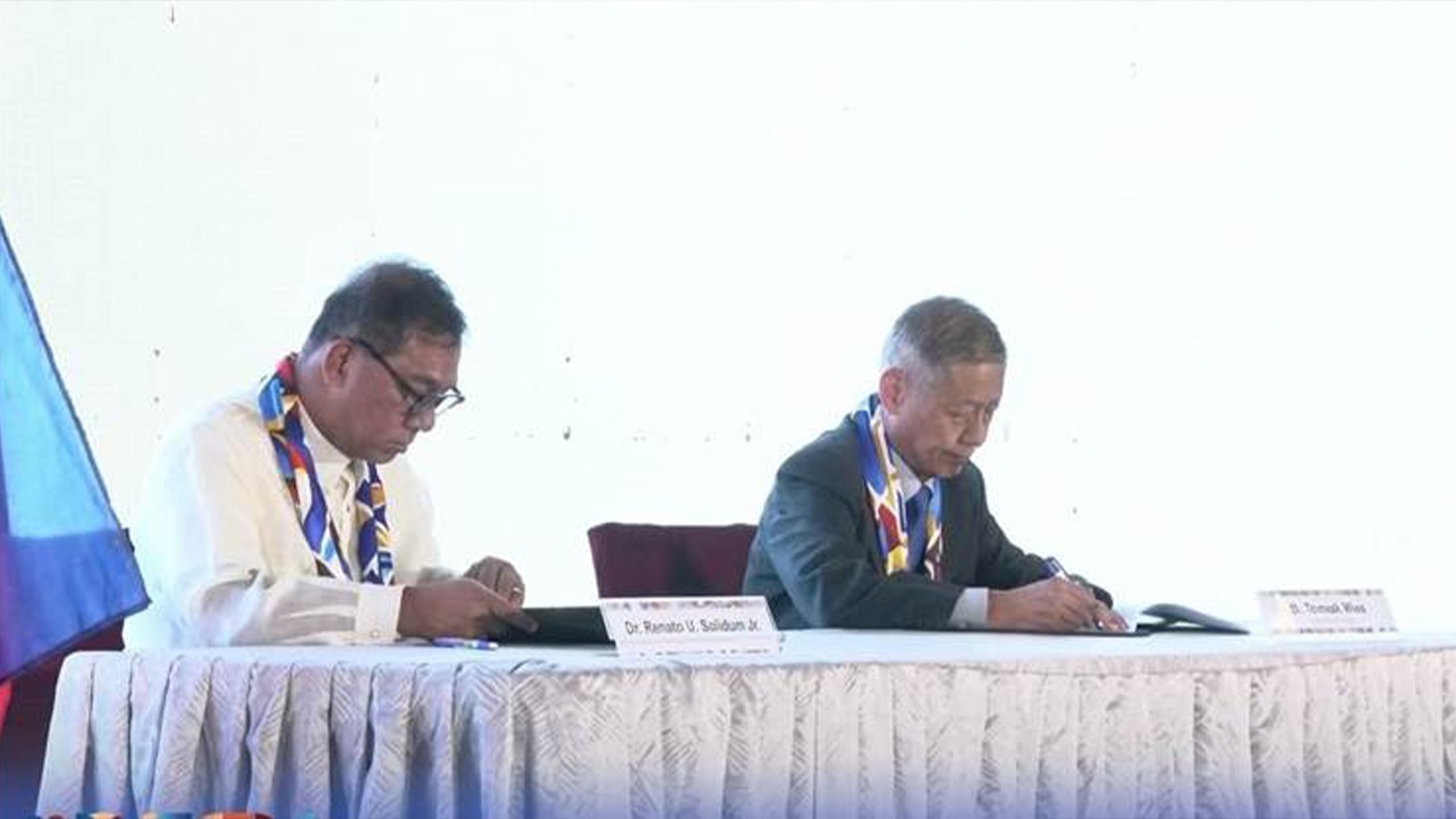
The DOST-Japan partnership is set to expand science and technology cooperation in Mindanao, with the Department of Science and Technology (DOST) and the Mindanao-Japan Science and Technology Platform (MJ-STeP) prioritizing the region’s blue economy and smart agriculture. The agreement is expected to create more opportunities for joint research, skills development and knowledge exchange between Philippine and Japanese institutions.
Strengthening the Philippines and Japan’s cooperation in research, technology development, and innovation, the two institutions formalized the partnership through a memorandum of understanding (MOU) signed during the opening ceremonies of the 2026 National Science, Technology and Innovation Week (NSTW) held in General Santos City.
The MJ-STeP is a Japan-based general incorporated association that connects academic, government, and industry sectors between Japan and Mindanao. It promotes sustainable social and economic development in the region through science, technology, and innovation.
“He (MJ-STeP President Yoshiaki Miwa) really wants to help Mindanao. And together with the universities and other stakeholders, there will be partnerships between the Philippine and Japanese interested collaborators,” DOST Secretary Renato U. Solidum Jr. said in a press conference.
Under the partnership, both institutions aim to expand opportunities through joint research and development, graduate scholarships, technical training, knowledge exchange, and collaboration between Philippine and Japanese universities, industries, and institutions.
While the development of the agreement has been under discussion since last year, DOST Undersecretary for Regional Operations Engr. Sancho A. Mabborang said that both sides agreed to prioritize the blue economy and smart agriculture sectors.
“Another thing I’m excited about is the exchange of scholars. I told the Ambassador earlier that we’re excited that we can later on send our staff and personnel in the regions [so] that they can learn the best practices and technologies of Japan,” Mabborang said.
Given that Mindanao is widely recognized as the ‘food basket’ of the Philippines for producing a huge share of the country’s food and agricultural exports, the collaboration will safeguard the country’s food supply by equipping local farmers, fisherfolk, and enterprises through the smart agriculture initiative.
Solidum said the DOST has existing programs in place that can accommodate possible collaborations with MJ-STeP.
“So, it depends on the details of a certain collaboration per area or exchange of university researchers. It’s very general, but the main goal is to help communities in Mindanao,” Solidum added.
Aside from blue economy and smart agriculture, the collaboration will also focus on functional foods, circular economy, disaster risk reduction, technology transfer, development of science and technology-based enterprises, and smart and sustainable communities.
The partnership is just one of the many highlights of this year’s celebration of NSTW, bringing science closer and more accessible to Filipinos.
With the theme, “Siyensya, Teknolohiya at Inobasyon: Kabalikat sa Matatag, Maginhawa, at Panatag na Kinabukasan,” and subtheme, “Science, Technology and Digital Innovation: Driving Food Security, Sustainable Energy and National Resilience,” the celebration brings together technologies, discussions, and innovations addressing pressing concerns on food security, access to clean and safe energy, and national resilience.

 Facebook
 Twitter