
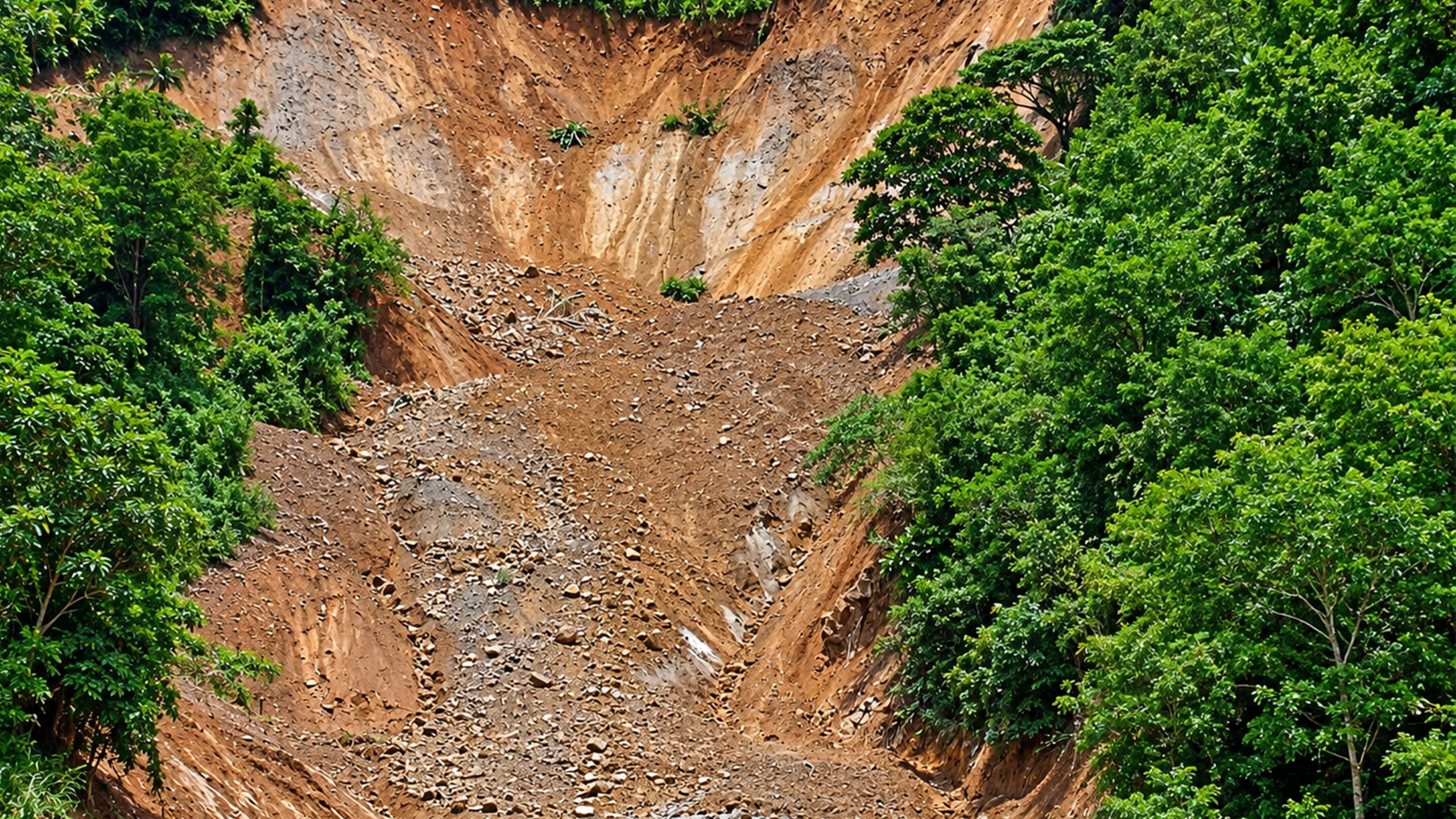
Soil erosion in the Philippines is an increasingly important environmental concern, as heavy rainfall, deforestation and unsustainable land-use practices can wash away fertile topsoil from farms and hillsides. The effects are often visible in rivers that turn brown with sediment after heavy rains, raising concerns about agricultural productivity, water quality and the long-term health of the country’s watersheds.
To many people, it is simply dirty water. To scientists, environmentalists, and agricultural experts, it is something far more alarming: fertile topsoil, the thin living skin of the earth upon which civilization depends.
Every storm carries away soil that took centuries, even millennia, to form. The losses are so gradual that they rarely make headlines. There are no casualty counts, no emergency declarations, and no military offensives to attract public attention. Yet experts warn that this silent destruction may threaten the country’s future as profoundly as any armed conflict.
The Philippines has long been familiar with wars fought with guns. In Mindanao, government troops, communist insurgents, and Moro rebels have battled for decades.
But another war, far older and far less visible, has been unfolding across the archipelago. Its enemy does not carry weapons. It advances inch by inch, rain after rain, year after year. Its name is soil erosion.
“Soil erosion is an enemy to any nation, far worse than any outside enemy coming into a country and conquering it because it is an enemy you cannot see vividly,” warned Harold Ray Watson, former director of the Mindanao Baptist Rural Life Center (MBRLC) Foundation, Inc. “It’s a slow creeping enemy that soon possesses the land.”
A Crisis Hidden in Plain Sight
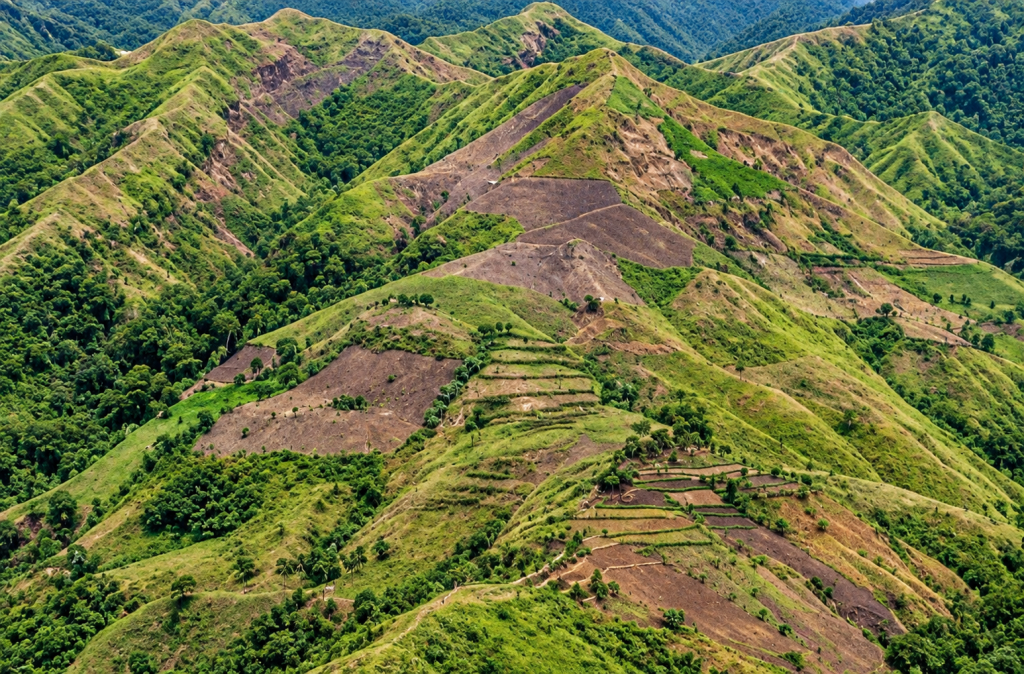
The danger of soil erosion lies partly in its invisibility. Unlike typhoons, earthquakes, and floods, soil erosion seldom appears dramatic. Yet the damage accumulates relentlessly beneath people’s feet.
The Washington, D.C.-based Worldwatch Institute once described soil erosion as the next greatest long-term threat to global economic stability after climate change. At the center of the crisis is the uppermost layer of earth rich in nutrients and organic matter. It serves as the foundation of food production and terrestrial life.
An American geologist explained its importance this way: “Soil is related to the earth much as the rind is related to an orange. It is the link between the rock core of the earth and the living things on its surface. It is the foothold for the plants we grow.”
Yet nature works painfully slowly. Scientists estimate that forming just 2.5 centimeters of fertile topsoil takes between 200 and 1,000 years. Astonishingly, the same amount can disappear from farmland in only 16 years.
The imbalance is staggering. According to the UN Food and Agriculture Organization (FAO), farmers are losing soil approximately 17 times faster than nature can replace it.
The Disappearing Foundation of Food Security
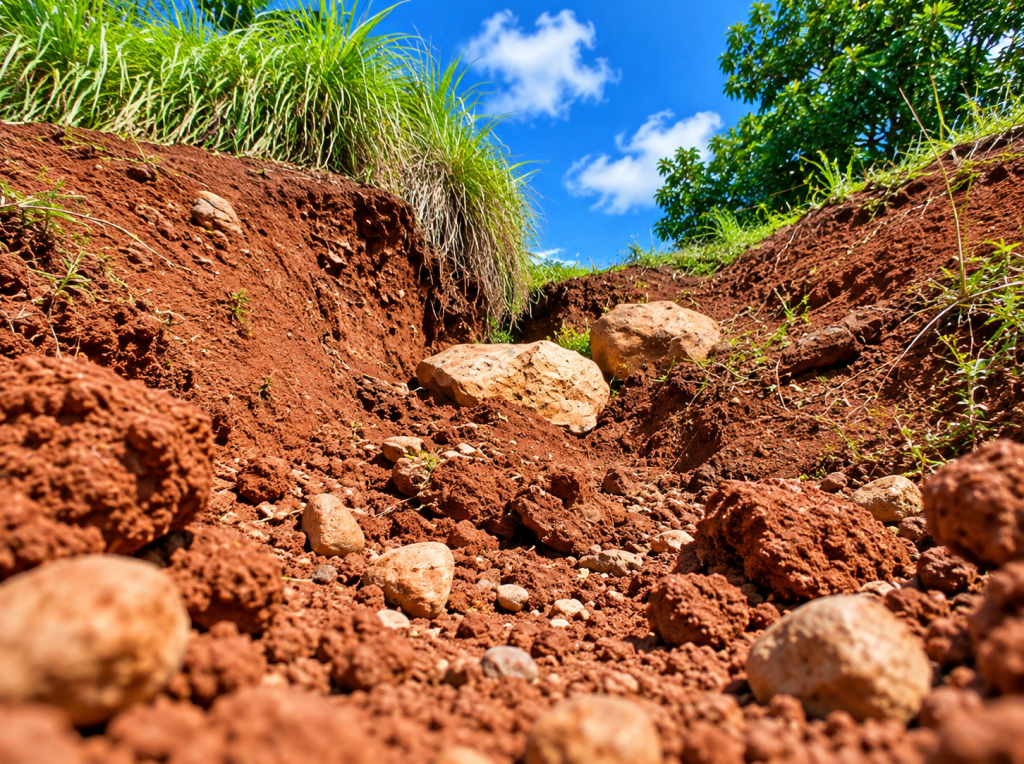
The implications extend far beyond agriculture. Studies show that losing only a few centimeters of topsoil can reduce the productivity of fertile soils by as much as 40 percent and poorer soils by as much as 60 percent.
“No other soil phenomenon is more destructive worldwide than soil erosion,” wrote soil scientist Nyle C. Brady in The Nature and Properties of Soils. “It involves losing water and plant nutrients at rates far higher than those occurring through leaching.”
The loss of topsoil weakens a farm’s capacity to produce food. It also increases production costs as farmers rely more heavily on fertilizers and soil amendments to compensate for declining fertility.
Authors Lester R. Brown and Edward C. Wolf, writing in Soil Erosion: Quiet Crisis in the World Economy, warned that erosion traps farmers in a difficult cycle. “The loss of topsoil affects the ability to grow food in two ways,” they wrote. “It reduces the inherent productivity of land, both through the loss of nutrients and degradation of the physical structure. It also increases the costs of food production.”
They added that when yields decline and production costs continue to rise, many farmers are eventually forced to abandon their land.
A study by the Royal Commission on Environmental Pollution estimated that roughly 30 percent of the world’s arable cropland has been abandoned because of severe soil erosion during the past four decades.
The Philippine Front Line
The Philippines is among the countries confronting severe soil degradation. The Department of Environment and Natural Resources (DENR) reported that an estimated one billion cubic meters of soil are lost annually because of erosion. This is equivalent to about 200,000 hectares of topsoil one meter deep disappearing every year.
Scientists estimate that 58 percent of the country’s 30 million hectares of land area is susceptible to erosion.
At the time when he was the DENR Secretary, the late Angel C. Alcala described the situation bluntly: “The magnitude of soil erosion in cultivated sloping areas has reached an alarming proportion.”
Evidence of the crisis can be seen in recurring floods, worsening droughts, declining groundwater supplies, and degraded watersheds throughout the country.
The Environmental Management Bureau (EMB), a line agency of DENR, has identified these environmental problems as some of the most visible consequences of unchecked erosion and forest destruction.
From Mountains to Reservoirs
The destruction does not end when topsoil leaves the farm. Once swept away by rainwater, soil travels downstream and settles in rivers, lakes, reservoirs, and irrigation systems. There it becomes a different threat: sedimentation and siltation.
The four major river basins of Luzon, namely Bicol, Magat, Pampanga, and Agno, have all experienced serious sedimentation problems.
One of the most notable examples is the Ambuklao Dam in Benguet. Due to siltation, the reservoir’s expected service life was reduced from 60 years to only 32 years.
What begins as erosion on a hillside eventually becomes a national problem affecting water security, hydroelectric generation, irrigation, and flood control.
The Silent Assault on Biodiversity
The destruction extends beyond farms and rivers. According to Dr. Michael A. Bengwayan, approximately 93 percent of land animal species and 92 percent of plant life depend directly or indirectly on topsoil. “Simply said, without the topsoil, their chances of survival are slim,” he said.
As soil disappears, native plants struggle to survive. The loss of these plants, in turn, threatens wildlife that relies upon them for food and habitat.
Bengwayan warned that degraded ecosystems may require decades or even centuries to recover, assuming they recover at all.
“The loss of topsoil often results in the death of many native plants,” he said. “As a consequence, it threatens the survival of animal diversity that depends on these native plants for existence.”
In extreme cases, landscapes become barren and biologically impoverished. Once fertile areas can become ecological wastelands where few species are able to survive.
Why the War Is Being Lost
If scientists have understood soil conservation for decades, why does the problem continue?
Part of the answer lies in the gap between knowledge and implementation. Agricultural researchers know that erosion can be reduced through contour farming, terracing, vegetative barriers, cover crops, crop rotation, proper fertilization, and organic matter application. Water movement can also be controlled through diversion channels, dikes, ponds, spillways, and other engineered structures.
But the widespread application of these technologies remains inconsistent. “The application of how to make these technologies work is in fact the real concern,” Alcala pointed out.
He cited traditional practices such as the Banaue Rice Terraces as proof that Filipinos have long understood the value of soil conservation. Yet despite that knowledge, many vulnerable landscapes remain inadequately protected.
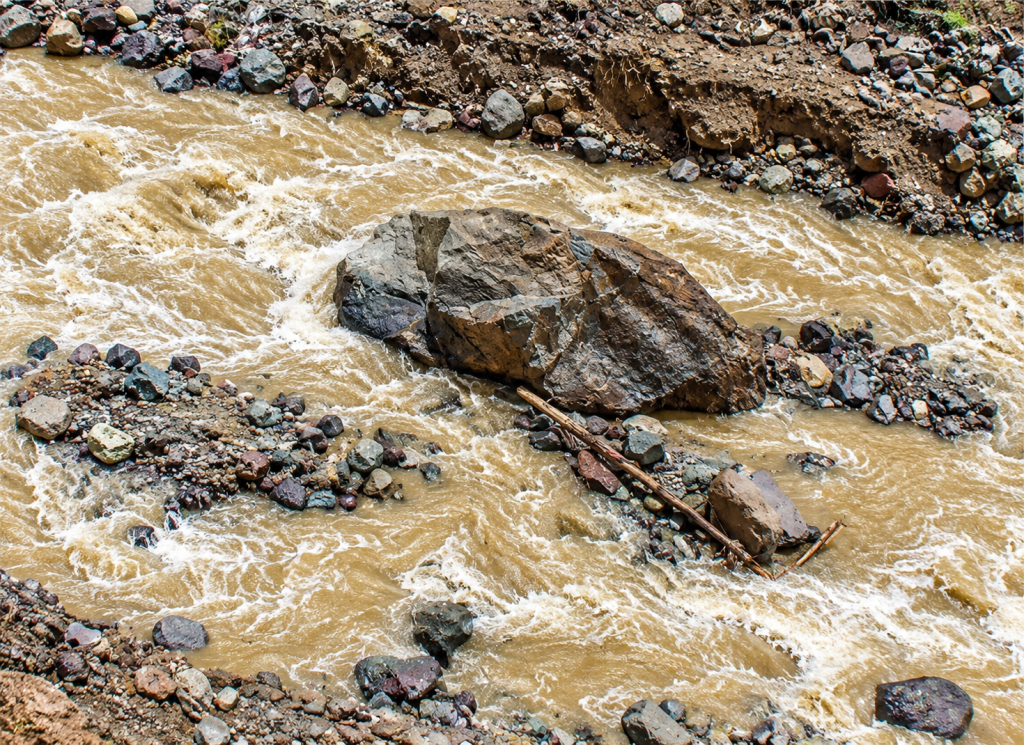
Watson was even more direct. “There’s no pattern of soil conservation in the Philippines,” he said when he received the prestigious Ramon Magsaysay Award in 1985 for international understanding. “You should see those muddy rivers from the air after heavy rains. Those are tons of topsoil moving down those rivers. Multiply that day by day, year after year and how much had been moved out—tons!”
A Future Hanging in the Balance
According to the UN FAO, approximately 25 billion tons of soil are washed into rivers worldwide each year. The world loses the equivalent of five to seven million hectares of farmland annually, an area roughly the size of Belgium and the Netherlands combined.
The consequences of continuing along this path are stark.
“The alternative,” an FAO report warned, “is famine.”
For the Philippines, the stakes are equally high. Soil erosion threatens food production, water resources, biodiversity, infrastructure, and rural livelihoods. Yet because the destruction unfolds slowly, it often escapes public attention.
That may be the greatest danger of all.
Conclusion: The War Nobody Notices
Unlike conventional wars, soil erosion claims no headlines and attracts few emergency responses. Yet every ton of topsoil lost represents a piece of the country’s future washing away.
The muddy rivers that appear after storms are more than floodwaters. They are evidence of a long-running environmental conflict that has been fought and lost, one grain of soil at a time.
Watson offered perhaps the most sobering reminder: “Land is not being remade. Soil is made by God and put here for man to use, not for one generation but forever. It takes thousands of years to build one inch of topsoil but only one good heavy rain to remove one inch from unprotected soil on the slopes of mountains.”
The Philippines cannot afford to keep losing this war. For beneath every harvest, every forest, every river, and every community lies the same fragile foundation: soil. And once it is gone, rebuilding it may take longer than a human lifetime.

 Facebook
 Twitter