
By Henrylito D. Tacio
(First of Two Parts)
There are fruits that delight, fruits that nourish, and fruits that simply exist. And then there is durian, a fruit so polarizing that it has inspired poetry, disgust, devotion, and even myth. It is the only fruit in Southeast Asia that can empty a room with its smell yet fill it again with people who swear it is the closest thing to culinary paradise. To encounter durian is to confront a contradiction: a fruit that smells like hell but tastes like heaven.
Travelers who wander through tropical markets often pause when they see it: a spiky, melon‑sized orb that looks like nature’s medieval weapon. Vendors crack it open with practiced force, releasing an aroma that has been described as everything from “overripe cheese” to “onions left in the sun.” But those who dare to taste it often discover a flavor so rich, so creamy, so utterly unique that they are changed forever.
Mark Twain was one such traveler. In Following the Equator, he wrote of his durian encounter: “It was a strange fruit, and incomparably delicious to the taste, but not to the smell.” He added that those who could ignore the odor long enough to take a bite would be rewarded with “a sacred joy” that eclipsed the fruit’s infamous scent.
British naturalist Alfred Russel Wallace, co‑discoverer of the theory of evolution, had a similar conversion. In 1855, after visiting the interior of Borneo, he noted how the smell filled the house and repelled many. He himself could not stomach it at first. But one day, finding a ripe fruit outdoors, he tasted it in the open air — and became, in his own words, “a confirmed durian eater.”
Even Ernest G. Darch, a prisoner of war during World War II, found solace in discarded durians left by Japanese guards. He wrote of its “truly wonderful, but indescribable taste,” likening it to banana blended with sweetened condensed milk, tinged with a mysterious flavor “that might be onions but which is not.”
Durian is not merely a fruit. It is an experience, a story, a test of courage — and in the Philippines, it is a regional identity.
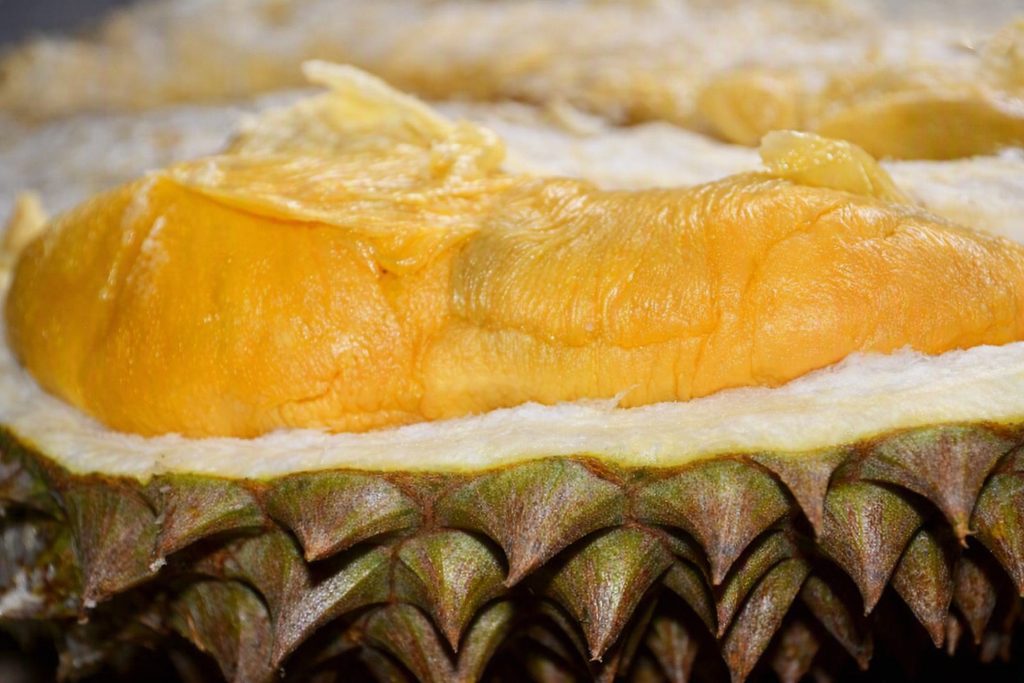
Where Durian Finds Its Home
In the Philippines, durian grows almost exclusively in Davao Region, a place blessed with rich volcanic soil from Mount Apo and a climate untouched by typhoons. Davao City, in particular, has become the country’s durian capital — a hub where growers, traders, and connoisseurs converge each year during peak season.
Significant production also thrives in Cotabato, Bukidnon, Agusan, and Sulu. Palawan, due to its historical ties with Borneo, has older, uncultivated varieties that hint at the fruit’s long migration across Southeast Asia.
But Davao remains the heartland. For decades, its growers have shaped durian not only as an agricultural commodity but as a cultural emblem. Families pass down grafting techniques, flavor preferences, and stories of harvests that defined their livelihoods.
Varieties such as Puyat, Arancillo, Umali, D101, and numerous native types have become part of the region’s identity.
Among these growers, two names stand out — men whose lives became intertwined with the fruit’s rise in Davao: Antonio B. Partoza, Jr. and Severino “Bering” Belviz.
Antonio Partoza: The Lawyer Who Became a Durian Icon
Antonio B. Partoza, Jr. never imagined that durian would bring him national attention. A lawyer and businessman by profession, he ventured into durian farming in 1987 with a simple goal: to promote Davao to the world through its most iconic fruit.
His farm, Partoza Durian, soon became a byword among durian lovers. He appeared on the cover of a national publication, was featured in local and international newspapers, and even landed in the in‑flight magazine of SilkAir. Television programs such as Living Asia and Balitang Europe showcased his farm, turning him into an unlikely ambassador of Davao’s pride.
What sets Partoza’s durian apart is his commitment to organic farming. Long before “natural agriculture” became a buzzword, he was already using indigenous materials — hot pepper, kakawate, and other farm‑available inputs — to nourish his trees.
“I prefer organic fertilizer to preserve our environment,” he said. But he is also pragmatic. Some plant diseases require chemical intervention, and he uses them when absolutely necessary.
Water is never a problem on his farm. A nearby creek and a deep well supply what the trees need, though he waters only during drought. “There’s no need to water them regularly,” he explained.
Partoza fertilizes monthly “if possible,” believing that organic inputs make trees healthier and fruits sweeter. “Organic fertilizer is better for the crops, less expensive, and safe for our farm workers,” he emphasized.
His perseverance has earned him recognition in the agricultural sector. But more importantly, it has helped elevate Davao’s reputation as the home of premium durian — fruit grown not just with skill but with philosophy.
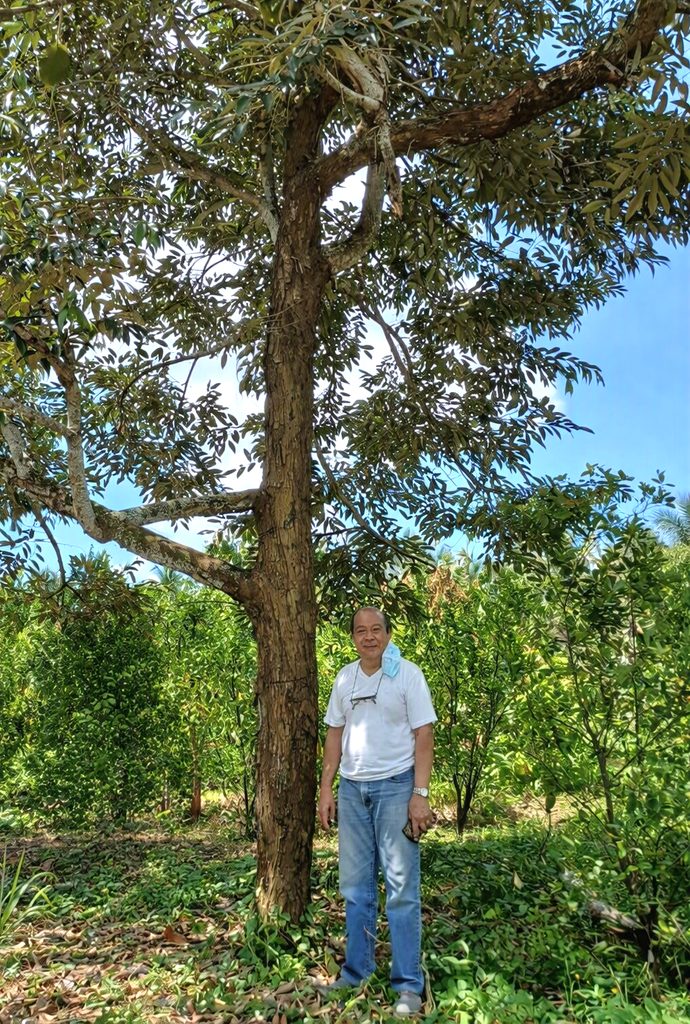
Severino “Bering” Belviz: The Durian King of Calinan
Another towering figure in Davao’s durian story is the late Severino Belviz, fondly called Bering. An outstanding farmer from Calinan, he once told us during a 2009 interview: “Dreams do come true only if you work hard for it.” He passed away in 2016, but his legacy remains deeply rooted in the region’s durian culture – thanks to his son, Emmanuel, which continued durian farming.
Bering was known as the Durian King, having planted 30 hectares of his 50‑hectare farm to durian. What began as an experiment turned into a thriving enterprise.
But Bering was not a man who believed in monocropping. “When you are farming, you should not focus on one type of crop only,” he said. Durian takes about five years to bear fruit, so he intercropped it with banana — Cavendish and Lakatan — to provide shade and generate income while waiting for durian’s first harvest.
His experience as a manager of a banana plantation proved invaluable. Banana protected young durian trees from harsh sunlight and wind, while also giving him a steady cash flow.
The durian fruits are harvested two times a year. The low peak season is from February to April while the high peak season is from September to November. On a good year, 8-10 tons can be harvested from one hectare on an annual basis. When rain is continuous, the harvest may go down to 4-6 tons per hectare per year.
Bering’s journey into durian farming was not straightforward. He began with cacao, planting seedlings at night using a flashlight after office hours. His dedication paid off: three years later, he harvested enough cacao to buy a 2.5‑hectare farm.
A trip to Thailand changed everything. While visiting cacao plantations, he and his wife Rosario made a side trip to a vast durian farm. They tasted the fruit, took photos, and unknowingly planted the seed of a new dream.
“Why don’t we plant durian in our farm?” he thought. At that time, few farmers in Davao grew durian extensively. The fruit was considered exotic, even strange. But Bering brought seeds from Thailand and planted them. Five years later, he harvested fruits with “very sweet, succulent meat.”
He never looked back. He sought advice from other growers, devoured books and publications, and conducted his own experiments. He even traveled to Sabah, Malaysia to study durian production technology.
His passion helped shape Davao’s durian industry, inspiring countless farmers to follow his lead.
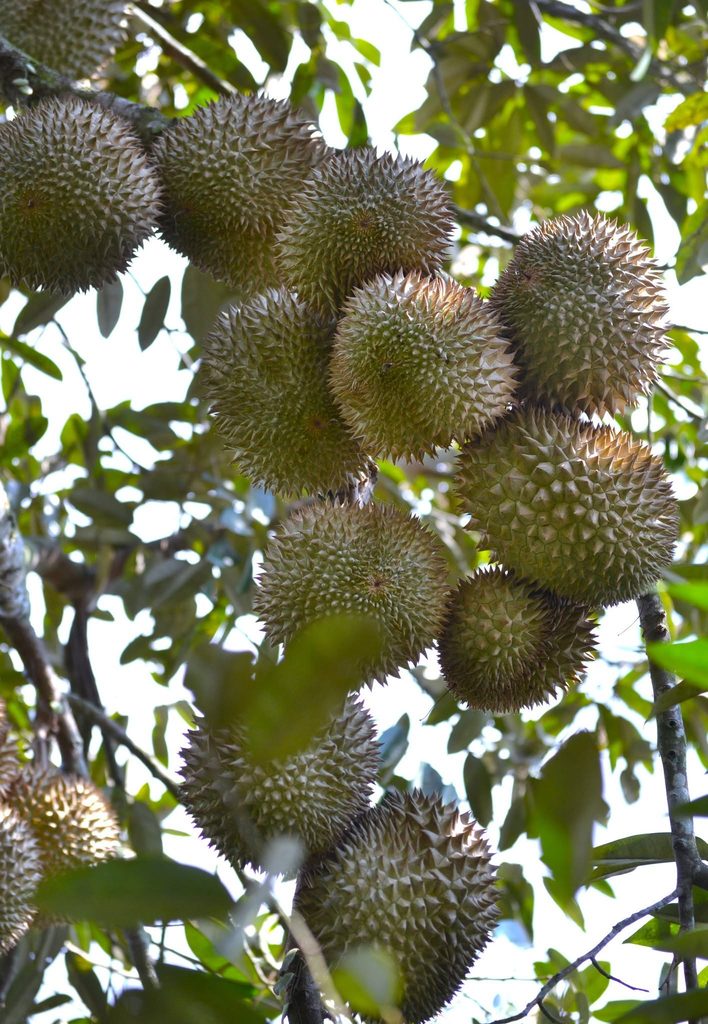
The Science Behind the Smell
Durian’s notorious smell comes from sulfur compounds — the same family of chemicals responsible for onions, garlic, and certain cheeses. But durian’s aroma is far more complex, containing dozens of volatile compounds that create its signature scent.
Its taste, however, is another story. The flesh — creamy, custard‑like, and rich — contains a mix of sugars, amino acids, and fats that give it a luxurious mouthfeel. Durian is surprisingly nutritious, packed with potassium, fiber, vitamin C, and healthy fats.
In Davao, the fruit’s flavor is shaped by volcanic soil, particularly sulfur‑rich earth from Mount Apo. This terroir gives Davao durian a distinct profile — often described as deeper, creamier, and more aromatic than durians grown elsewhere.
A Fruit Worth the Journey
The word “durian” comes from the Indonesian duri, meaning thorn. Botanically known as Durio zibethinus, it is native to Indonesia and Malaysia but has found a second home in the Philippines.
More than 150 years ago, Alfred Russel Wallace wrote: “To eat durian is a new sensation worth a voyage to the East to experience.” For many, that voyage leads straight to Davao — where the fruit is not just eaten but celebrated, debated, and loved.
Durian may divide opinions, but in Davao, it unites a region. It is a symbol of resilience, creativity, and pride — a fruit that smells like hell, tastes like heaven, and tells a story like no other. (To be concluded)

 Facebook
 Twitter