
By Henrylito D. Tacio
In a quiet corner of North Cotabato, where traditional farming remains the backbone of many communities, a young agripreneur is proving that innovation sometimes comes in the most unexpected forms. At just 32, John Paul A. Cabangal has become one of the most promising advocates of sustainable agriculture, transforming a tiny insect into a source of income, nutrition, and inspiration.
His story is not rooted in a family farming legacy. Instead, it is a testament to curiosity, resilience, and the willingness to explore unconventional solutions to modern agricultural challenges.
Today, John Paul is known for raising superworms, producing insect-based food products, and promoting sustainable farming technologies. But his remarkable journey began not with insects, but with rabbits.
In 2021, John Paul became one of the recipients of the Young Farmers Challenge (YFC) Program of the Department of Agriculture. Armed with a grant and a vision, he established an enterprise called “Science and Technology-based Rabbit Production.”
He started breeding meat-type rabbits such as the New Zealand and Californian breeds and eventually converted them into a profitable rabbit lechon business. The venture gained traction, encouraging him to diversify further. Soon, Japanese and American silky chickens joined his farm, together with native chickens raised for consumption.
Business was growing, but so were expenses. Like many poultry raisers, John Paul struggled with the escalating cost of commercial feeds. Feeding a growing flock was becoming increasingly expensive and threatened the profitability of his enterprise.
“Commercial feeds for chickens are too expensive. I realized that I needed to do something to lessen my cost of feeding chickens,” he recalled.
Determined to find alternatives, he began collecting vegetable scraps from local markets. While these reduced feed expenditures, he knew vegetables alone could not supply the protein and nutrients his birds needed to thrive.
That search for a sustainable protein source led him into the fascinating world of insect farming.
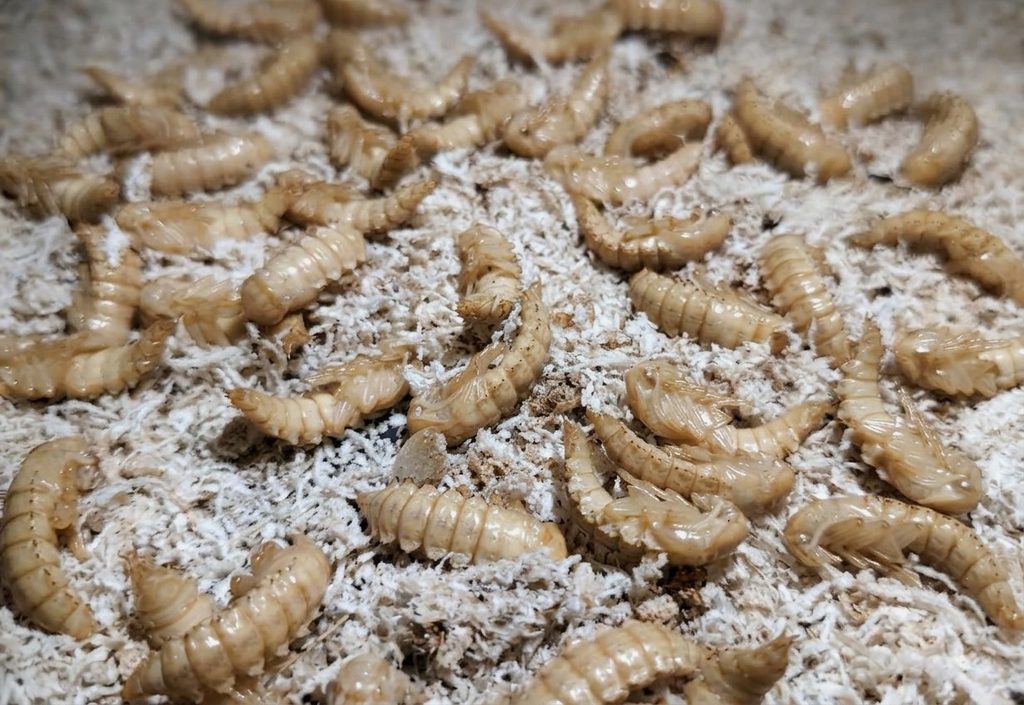
While exploring alternatives, John Paul discovered superworms, the larvae of the darkling beetle. Rich in protein and relatively easy to produce, they appeared to be a practical answer to his feeding problem.
Finding them, however, was another matter. Since there were no pet shops in his area that sold superworms, he turned to social media. A Facebook post seeking suppliers eventually connected him with a fellow 4-H Club member who introduced him to a superworm raiser in President Roxas, North Cotabato.
John Paul made the trip and purchased 100 superworms. That modest purchase would eventually grow into a thriving enterprise.
Understanding the biology of superworms became his next challenge. He learned that when isolated without food and water, the larvae eventually transform into pupae and later emerge as adult beetles.
Patiently, he placed individual worms in small sauce containers and waited. After 15 days, they transformed into pupae. Another 15 days later, they became beetles. Those beetles became the foundation of his breeding program.
Today, John Paul manages 10 colonies, each consisting of 200 to 300 beetles. Every colony produces approximately three to four kilograms of superworms monthly. With each kilogram containing around 1,000 to 1,250 worms, production has expanded far beyond what he initially imagined.
What started as a strategy to reduce feed costs evolved into a profitable and sustainable agribusiness.
Unlike many agricultural entrepreneurs who rely heavily on formal training, John Paul built much of his expertise through independent learning. He immersed himself in online articles, research publications, and educational YouTube videos.
Yet theory alone was not enough. Like any farming venture, superworm production came with challenges.
Ants, spiders, lizards, and rats frequently threatened his colonies. High temperatures presented another serious obstacle. During periods when temperatures reached 40 to 45 degrees Celsius, mortality rates increased significantly.
“Superworms require an ambient temperature of at least 25 to 30 degrees Celsius,” he explained.
Through trial and error, he improved facility design, refined management practices, and developed solutions to keep his colonies productive despite environmental challenges. The insects themselves are surprisingly efficient recyclers.
Superworms consume fruits, vegetables, and feed substrates depending on their growth stage. For breeding colonies, John Paul uses fruit, vegetables, and commercial chicken feed. Juvenile larvae are provided with a combination of vegetables and feed supplements, while older larvae thrive primarily on fruits and vegetables.
For insects destined for human consumption, he follows stricter standards, feeding them only clean and nutritious produce such as chayote, carrots, squash, papaya, radish, and cucumber.
Beyond serving as feed ingredients, superworms can consume organic wastes including vegetable trimmings, fruit peels, banana trunks, and coconut husks. In doing so, they offer an innovative way of reducing agricultural waste while creating valuable protein.
The market for superworms is surprisingly diverse. Smaller larvae are sold to aquarium enthusiasts as fish feed. Larger worms find buyers among poultry raisers and owners of iguanas, tarantulas, hamsters, and other exotic pets.
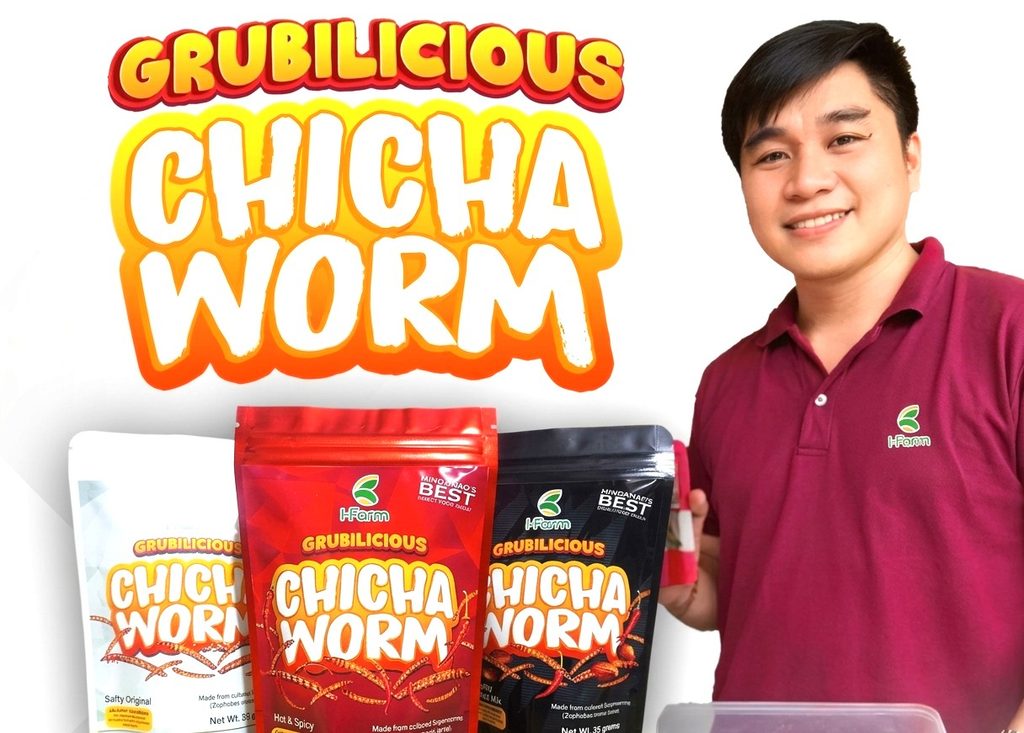
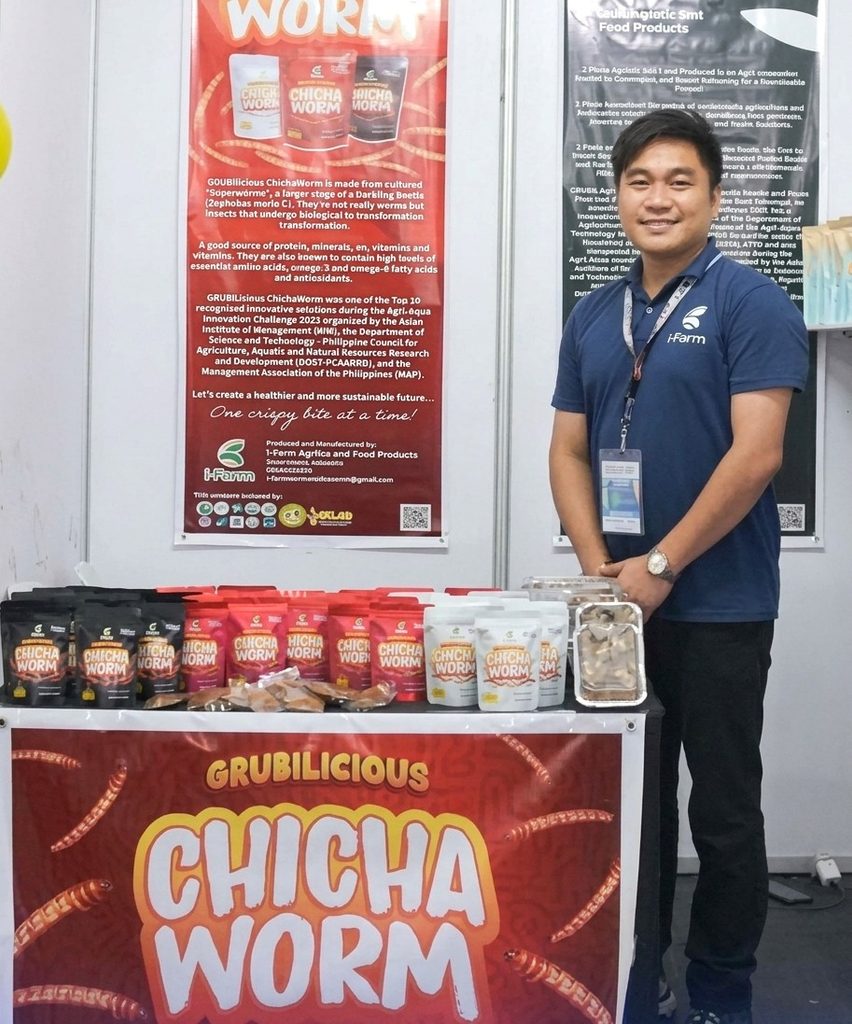
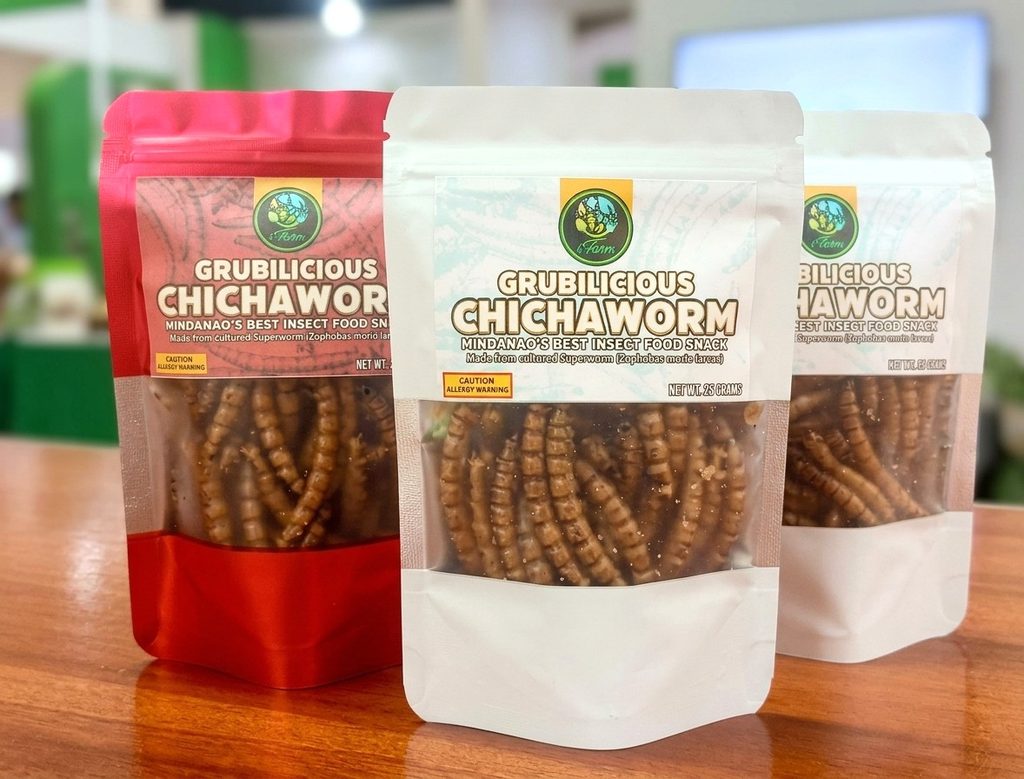
Yet it is in human food where John Paul sees extraordinary potential. His most unique innovation is a product called GRUBilicious Chichaworm, a crispy snack made from carefully processed superworms.
The preparation process reflects both food safety and quality standards. Worms undergo gut-loading with nutrient-rich fruits and vegetables, followed by a degutting period. They are then washed, cleaned, humanely euthanized through blanching or freezing, and slow-fried with garlic and aromatic seasonings until crisp.
Finally, they are packaged in vacuum-sealed containers with desiccants to ensure freshness and shelf stability. The result is a crunchy snack that challenges conventional ideas about food.
GRUBilicious Chichaworm comes in five flavors: salty original, hot and spicy, peanut mix, Filipino adobo, and chocolate-coated. Consumer reactions are often predictable at first. Many hesitate when they learn the snack is made from insects. But once they gather enough courage to take a bite, skepticism often transforms into surprise.
“They find it tasty, crunchy, delicious, nutritious and sustainable,” John Paul said.
His ambitions, however, extend beyond snack production. He is currently developing additional products derived from superworms. These include chocolate-coated chichaworms targeted at children and first-time consumers, nutrient-rich superworm frass for use as organic fertilizer, and superworm meal intended as an alternative protein source for livestock feeds.
Such innovations address one of agriculture’s pressing concerns: dependence on imported feed ingredients such as soybean meal and fish meal.
For John Paul, edible insects represent more than a business opportunity. They are part of a solution to global concerns surrounding food security, environmental sustainability, and resource efficiency.
“Superworms or edible insects must be utilized as a sustainable source of protein,” he emphasized.
The passion to innovate is reflected in the name of his enterprise: I-Farm. The concept stands for “Impact, Innovative, Inspires.”
The three words summarize his mission. He hopes to create meaningful impact, develop practical innovations, and inspire others to explore opportunities beyond conventional farming systems.
Interestingly, John Paul did not grow up in a farming family. His parents were not farmers. His agricultural journey began in 2011 when he joined the 4-H Club and participated in various hands-on training programs conducted by the Department of Agriculture-Agricultural Training Institute.
He continued investing in his education, acquiring several TESDA National Certificates covering organic agriculture, crop production, animal production, and food processing. In 2018, he was selected as a participant of the Young Farm Leaders Training Program in Japan, where he was exposed to advanced agricultural technologies and production systems. In 2022, he was recognized as a Youth Ambassador by the Department of Agriculture.
Another milestone came in October 2025 when he joined an educational and innovation immersion program in Singapore as one of North Cotabato’s leading innovators. There, he encountered a technology that could further revolutionize insect farming: Container Farm Technology (CFT).
The system utilizes modular, vertically arranged units with precise environmental controls to maximize the production of edible insects such as superworms, crickets, and black soldier fly larvae.
Inspired by the concept, he began championing the development of a SMART Modular Container Farm, an agri-tech innovation that could be adapted throughout the region.
The technology opens exciting commercial possibilities, including the production of insect protein powder for human consumption, insect meal for livestock feeds, and insect oil that may someday contribute to renewable biofuel development.
For many people, a worm remains nothing more than a tiny creature hidden beneath soil or waste. For John Paul Cabangal, it symbolizes opportunity.
Through determination, innovation, and a willingness to challenge convention, he has transformed an overlooked insect into a catalyst for sustainable agriculture and rural entrepreneurship.
His message to aspiring farmers and entrepreneurs is simple yet powerful: “We really need to explore new ideas. We just need to break out from our shells in order to discover and utilize our unknown potentials.”
In an era marked by climate challenges, rising food costs, and growing concerns over sustainability, his story offers a timely reminder that some of the most transformative solutions may come from the least expected places.
Sometimes, they emerge from a tiny worm.

 Facebook
 Twitter