
Words and Photos by Henrylito D. Tacio
(First of Two Parts)
“Extinction is forever.”
Those three words, often repeated by conservationists around the world, have never been more relevant than today.
“Of all the global problems that confront us, species extinction is one that is moving the most rapidly and the one that will have the most serious consequences,” warned American biologist Dr. Peter Raven.
Unlike climate change, pollution, or other environmental crises that can sometimes be mitigated or reversed, extinction is permanent. Once a species disappears, it is gone forever.
The Philippines, recognized as one of the world’s biodiversity hotspots, hosts thousands of unique plant and animal species found nowhere else on Earth. The archipelago’s isolation through countless islands has created remarkable biological diversity.
According to the Biodiversity Management Bureau (BMB), more than 2,500 endemic flora and fauna species inhabit the country, excluding insects and invertebrates.
Yet many of these species face a grim future.
More than four decades ago, wildlife expert Dr. Lee Talbot issued a warning that remains chillingly relevant today: “A few decades ago, the wildlife of the Philippines was notable for its abundance; now, it is notable for its variety; if the present trend of destruction continues, Philippine wildlife will be notable for its absence.”
Among those increasingly threatened is one of the country’s most celebrated floral treasures, the waling-waling, an orchid so magnificent that it has earned the title “Queen of Philippine Orchids.”
A flower fit for royalty
Few flowers command as much admiration as the waling-waling. Known scientifically as Euanthe sanderiana or Vanda sanderiana, the orchid is famous for its large, colorful blooms. Orchid experts around the world prize it for both its beauty and its genetic potential.
“It is one of the finest orchid species endemic to the Philippines, desired by orchid growers and breeders alike for its showy and attractive flowers,” wrote orchid authority Dr. Helen Valmayor in her landmark publication Orchidiana Philippiniana.
The flower’s striking appearance partly explains its legendary status.
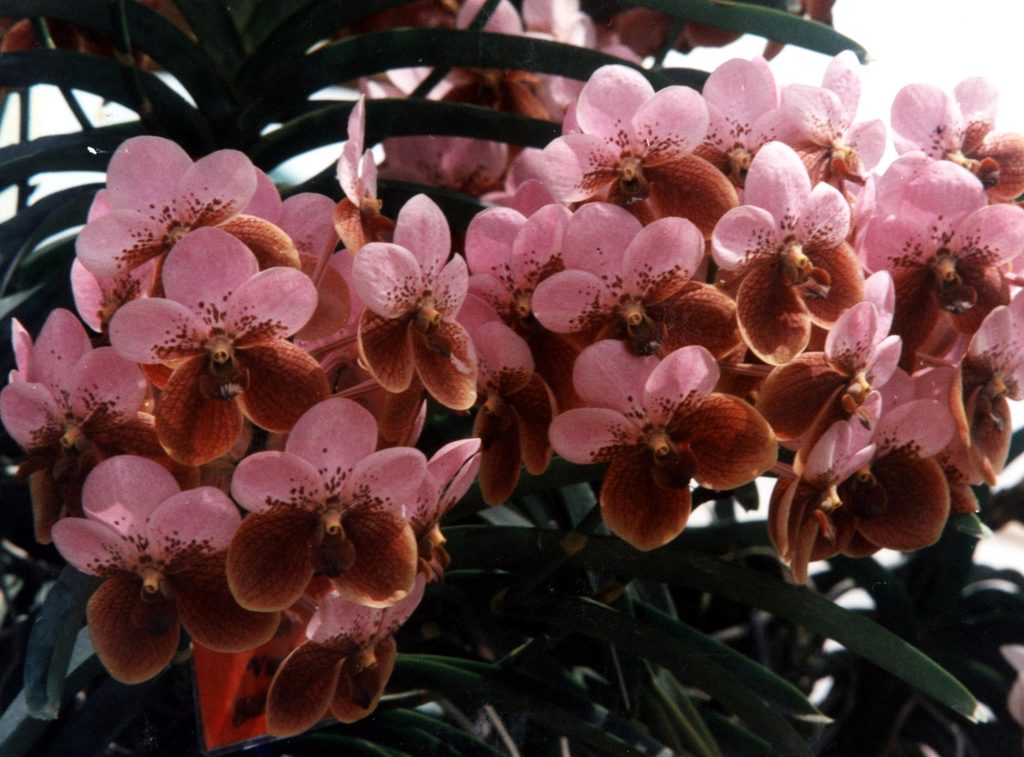
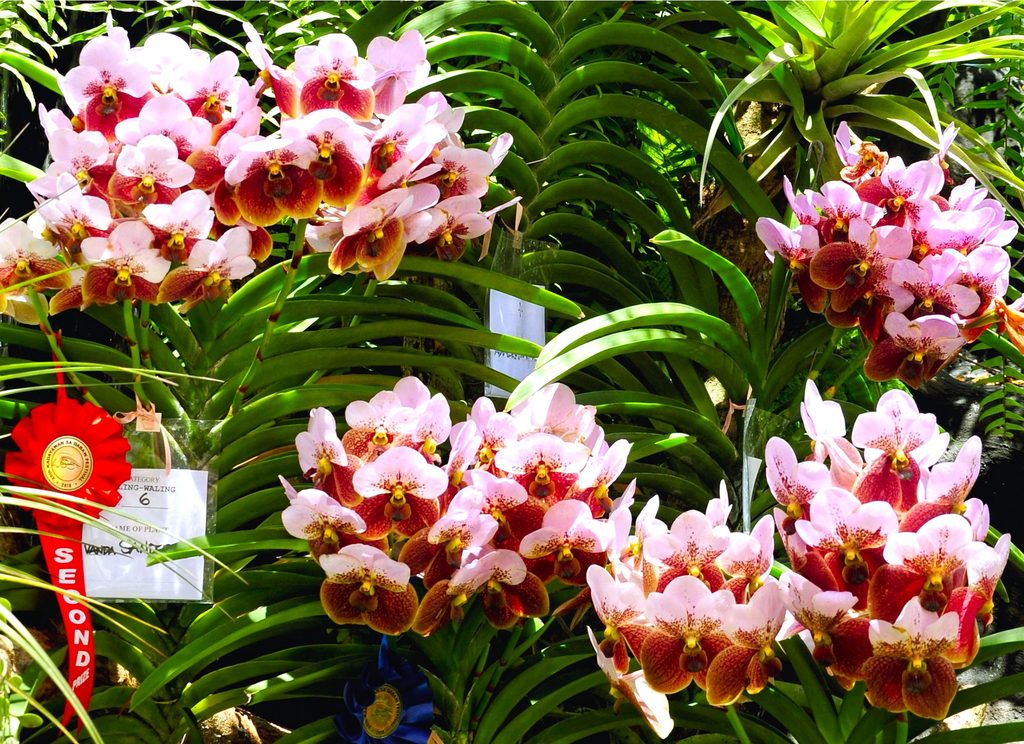
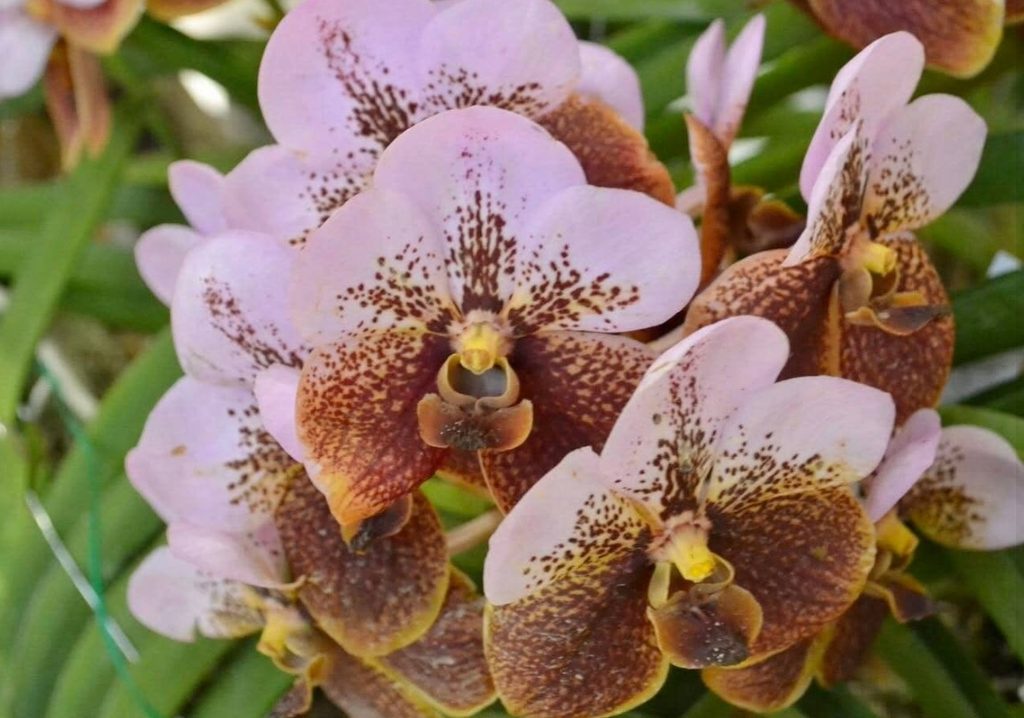
In A Pictorial Cyclopedia of Philippine Ornamental Plants, the blooms are described as flat flowers reaching eight centimeters across, adorned with bluish-pink sepals and petals, accented by buff-yellow stains and crimson reticulations.
But beyond its physical beauty lies a deeper cultural significance.
The orchid is endemic to Mindanao, particularly Davao and neighboring areas. Long before it became famous among collectors and botanists, it was revered by indigenous Bagobo communities, who considered it sacred and associated it with the diwata, or forest spirit.
The very name “waling-waling” is said to be an allusion to a moth in flight.
From rainforest mystery to global sensation
The story of how the world discovered the waling-waling reads like an adventure novel.
During the late 19th century, English orchid magnate Frederick Sander, known as the “Orchid King,” dispatched plant collector Carl Roebelin to Mindanao in search of rare and spectacular orchids.
According to Dr. Valmayor’s account, Roebelin had heard astonishing stories from local inhabitants about an orchid growing deep in mosquito-infested forests, bearing flowers “as big as dishpans.”
Intrigued by the possibility of finding a botanical treasure, he undertook an arduous journey into Mindanao’s mountainous interior.
Traveling with trader Sam Choon, Roebelin ventured upriver toward indigenous settlements. There, amidst forests largely untouched by outsiders, he encountered stories of a mysterious flower unlike any known orchid.
One night, while staying in a treehouse built high above the ground, he was awakened by shaking and loud noises.
Believing an earthquake was occurring, he tied himself to a tree branch for safety. When morning came, he discovered that what had awakened him was not seismic activity but branches swaying under clusters of enormous, breathtaking orchid blooms.
He had finally found the legendary waling-waling.
The plants he initially collected never reached England because the disruptions caused by an earthquake interrupted mail services. Nevertheless, Roebelin later succeeded in transporting specimens to Europe.
When the orchid finally flowered in England in 1882, it caused a sensation. German botanist Heinrich Gustav Reichenbach named it after Sander. Soon afterward, the orchid became the centerpiece of exhibitions and collections throughout Europe.
From there, its influence spread worldwide.
The orchid subsequently contributed to the development of hundreds of colorful hybrids that today form part of the multibillion-dollar international orchid industry.
Ironically, while the flower flourished abroad, its future in its homeland grew increasingly uncertain.
Victim of its own beauty
Beauty can be both a blessing and a curse. For the waling-waling, extraordinary beauty became a liability.
The flower’s popularity fueled relentless collecting from the wild. During the 1950s, extensive harvesting of rare orchids accelerated, with traders and collectors removing vast numbers of plants from forests and exporting them abroad.
“The waling-waling is almost extinct in the wild,” lamented noted botanist Dr. Domingo Madulid.
Today, surveys indicate that specimens can often be found more readily in orchid collections and nurseries overseas than in Philippine forests where they originated.
Habitat destruction further worsened the situation.
The lowland and montane forests where the orchids once flourished have suffered from logging, land conversion, and human encroachment.
Senator Loren Legarda, a longtime advocate of biodiversity conservation, warned that wild populations continue to be threatened by commercial harvesting and habitat loss. “The waling-waling’s beauty adorns our treetops,” she said, “but there are threats to its survival.”
The combination of overcollection and deforestation has pushed natural populations perilously close to disappearance.
A symbol worth saving
Despite the gloomy picture, there remains hope. One major breakthrough came in 1985 when renowned Davao orchidist Charita Puentespina successfully mass-produced waling-waling through embryo culture.
The achievement marked a turning point in orchid conservation. For the first time, enthusiasts could acquire cultivated plants without removing specimens from forests.
The public quickly embraced the initiative. During the Araw ng Dabaw celebration, waling-waling seedlings were offered to the public, sparking tremendous interest among hobbyists and commercial growers.
Since then, the orchid has become a familiar sight in countless gardens throughout Davao and other parts of the Philippines.
Yet conservationists caution that growing thousands of cultivated plants does not automatically guarantee survival in nature.
A bloom inside a garden is not the same as a flower thriving freely in the forests where evolution placed it.
As one observer aptly noted, bringing the waling-waling back to home gardens is one achievement. Seeing it flourishing once again in its natural habitat at the foothills of Mount Apo is another.
That remains the ultimate challenge.
For as long as wild populations remain endangered, the story of the waling-waling is unfinished.
The orchid that conquered the world still awaits full restoration in the forests where it first bloomed. (To be continued)

 Facebook
 Twitter