
By Henrylito D. Tacio
There are turning points in life that arrive quietly—without drama, without warning, without any grand announcement. For Donnie Bustamante, known online as Don Bustamante, that moment came not from a career shift or a life‑changing opportunity, but from a doctor’s advice delivered in a quiet clinic room: Cut back on rice. Eat more vegetables. Manage type 2 diabetes.
It sounded simple, almost ordinary. Yet that prescription would eventually transform a rooftop in Taguig City into a thriving garden—and a photographer into an unexpected advocate of organic, homegrown food.
What began as a health necessity slowly evolved into a mission. Along the way, Bustamante discovered that sometimes, the smallest spaces can grow the biggest changes.
Bustamante was diagnosed with type 2 diabetes in 2015, five years before the pandemic disrupted lives across the country. Determined to follow his doctor’s recommendation to eat more vegetables, he started buying more greens from the market. But the cost was staggering.
“I was spending almost ₱3,000 every week,” he recalled in Taglish. “Ganun kamahal ang gulay.”
The expenses were unsustainable. Just as he was struggling with the rising cost of healthy food, his family finished building their house in Taguig City. On the rooftop sat a bare 4‑by‑6‑meter space—unused, unnoticed, unremarked.
“I thought to myself: Why not try growing vegetables since I have the space?” he said.
That simple question became the first step of a journey he never planned but fully embraced. Bustamante had no agricultural background, no training, no experience, no mentor. But he had curiosity—and the internet.
“I started buying seeds and looking online for guidance on how to get started,” he said. “I watched videos, read posts, and asked friends who were into gardening.”
He soon learned, however, that not everything online is reliable. “Not all the information you read or see is accurate,” he admitted. “I make it a point to test everything to see what actually works.”
His rooftop had no soil, so he turned to container gardening. And instead of buying pots, he looked to the streets. “I realized I could use upcycled containers—soft‑drink bottles, mineral‑water bottles, and similar items people throw away,” he said.
Lush green leafy vegetables grown in repurposed plastic containers.
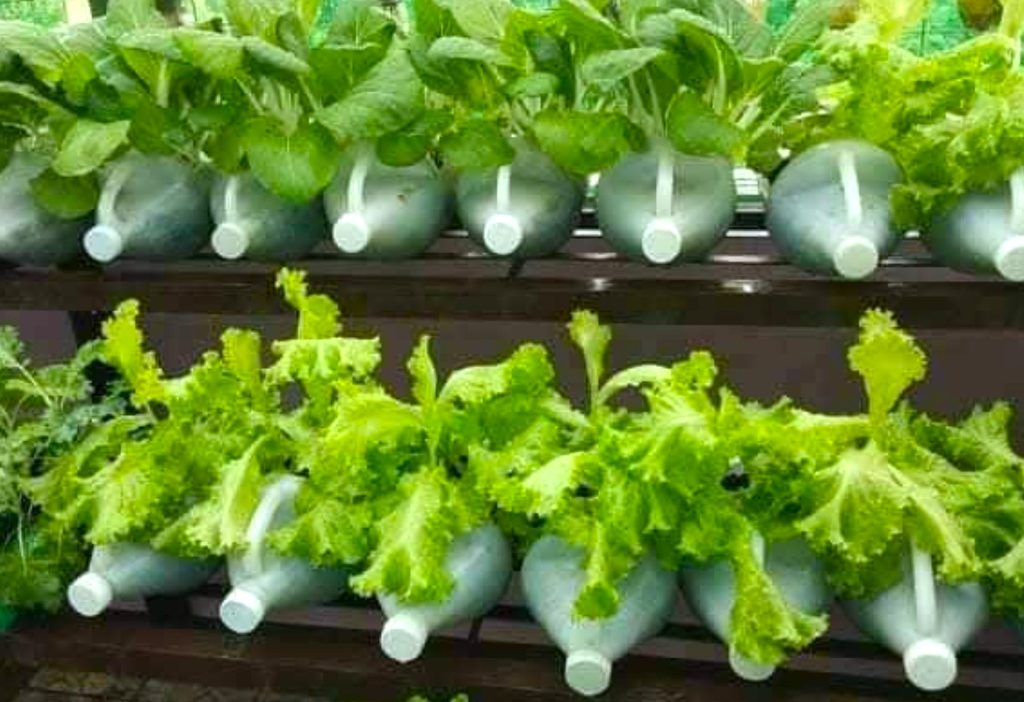
He began collecting empty PET bottles from relatives and neighbors. It was both practical and purposeful—cutting costs while reducing waste. PET bottles, made from polyethylene terephthalate, are durable, lightweight, and chemically resistant. For Bustamante, they were perfect.
“Growing in PET bottles is actually more efficient than planting directly in the ground,” he explained. “When you fertilize soil, rain washes nutrients away. In bottles, those nutrients stay put.”
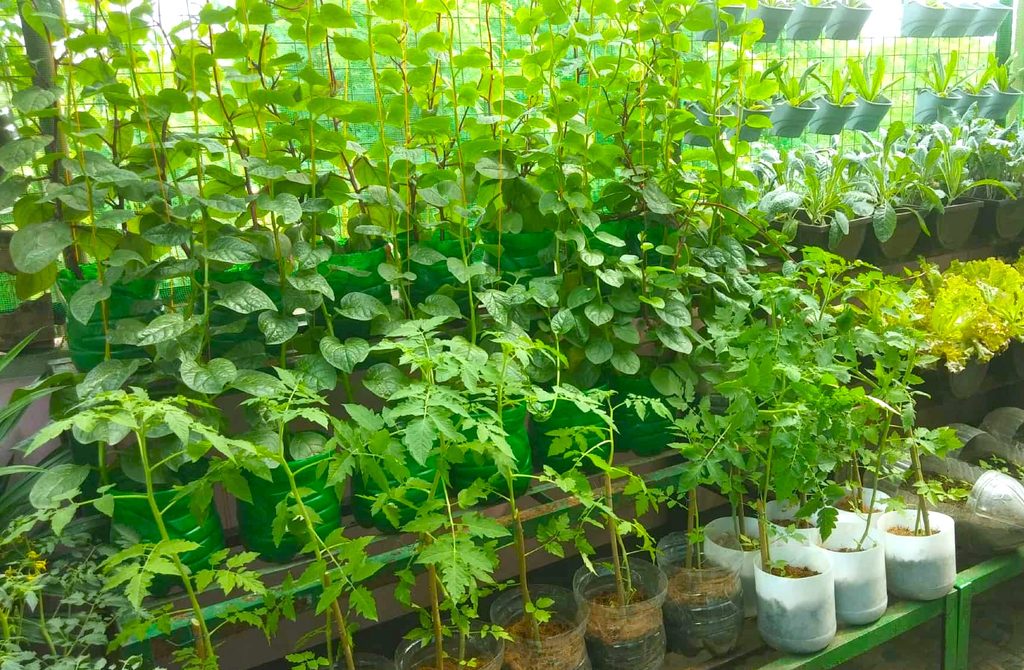
He started with leafy greens—bok choy, lettuce, mustard, water spinach—because they were easy to grow and regulars on their table. Later, he expanded to fruit‑bearing crops: tomatoes, chili peppers, okra, eggplant, string beans.
“Growing your own vegetables means less shopping at the market,” he said. “And they’re fresher—minutes lang mula harvest, nasa kusina na.”
At first he bought seeds; later, he saved them from his own harvests. He planted in gallon jugs, old buckets, plastic bottles—anything that could hold soil. Rooftop gardening did not come without challenges.
“Carrying soil and supplies up to the roof was hard at first,” he said. “But eventually, I got the hang of it.”
Water was never an issue. He had a tap on the roof, let water sit to let chlorine dissipate, and set up ways to collect rainwat
Because space was tight, he committed to organic methods. “I learned to make organic fertilizers and compost from kitchen scraps,” he said.
Banana peels, eggshells, coffee grounds, vegetable trimmings—nothing went to waste. Everything fed the plants. Pests were few up on the roof, but aphids, whiteflies, and leaf miners still appeared. His answer: organic solutions like neem oil and fermented oregano.
Bustamante believes healthy plants resist disease. That belief led him to adopt JADAM, a Korean‑inspired sustainable farming system focused on low‑cost, all‑natural inputs made from local materials.
He also uses EMAS (Effective Microorganism Activated Solution) to boost soil and plant health, and EMRW (Effective Microbial Rice Wash) to improve fertility.
He harvests almost daily. “Leafy greens like bok choy, kale, mustard, and pak choi are ready in about 25 days,” he said. “I sow seeds every 10 days so there’s always something to harvest.”
Tomatoes, chili peppers, and okra keep producing for nearly a year. Ninety percent of what he grows feeds his family; they rarely buy vegetables now. Excess goes to neighbors—earnings go right back into the garden, making it self‑sustaining.
Growing tomato and alugbati.
After a year, he began sharing tips through a Facebook group and documenting his journey on YouTube. Before the pandemic, he worked as a university photographer in Manila. When the pandemic hit, he lost that job.
“I didn’t go back after things reopened—my YouTube channel was already earning,” he said. “I decided to focus on gardening and vlogging.”
He also started a business supplying organic fertilizers, natural pest treatments, and gardening supplies.
As his knowledge grew, so did his influence. He was invited to lead free seminars in barangays and communities across the country. He never charged outside his hometown—only asked for travel expenses to be covered.
“Twice a month, I hold paid workshops right here at home,” he said. “Those fees help me travel to communities all over Metro Manila to teach for free.”
He also donates his time to schools, hospitals, rehabilitation centers, and underserved areas.
To Bustamante, rooftop gardening is both noble and rewarding. “It cuts household expenses, yes—but it can also generate steady income, especially with organically grown produce,” he says.
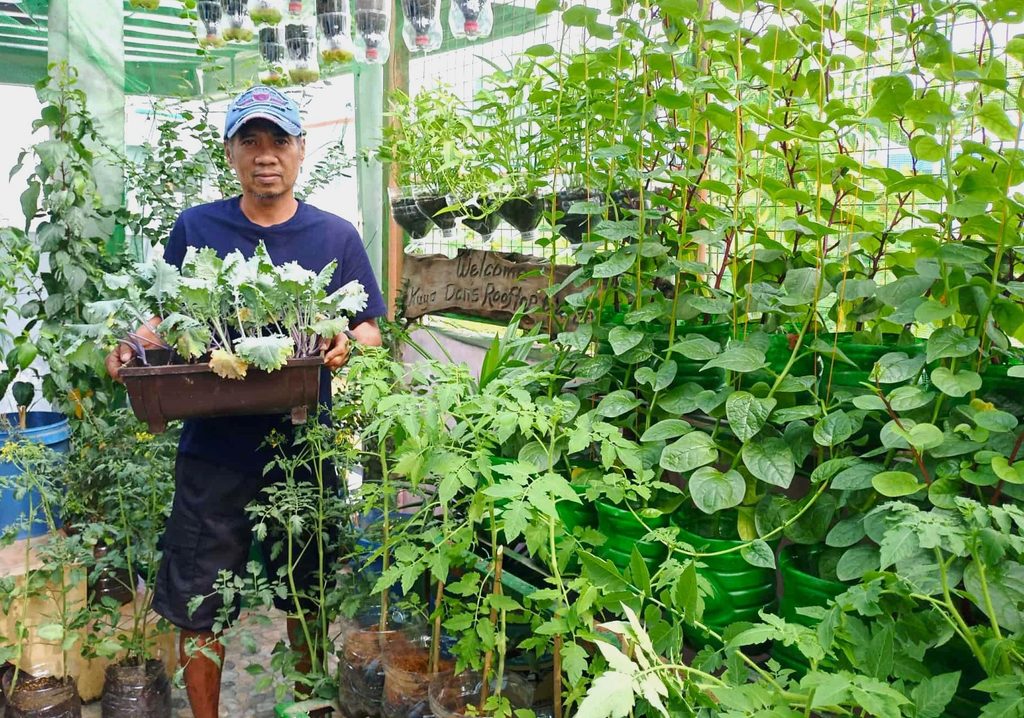
Donnie Bustamante, the photographer who now grows organic vegetables on his rooftop.

 Facebook
 Twitter